
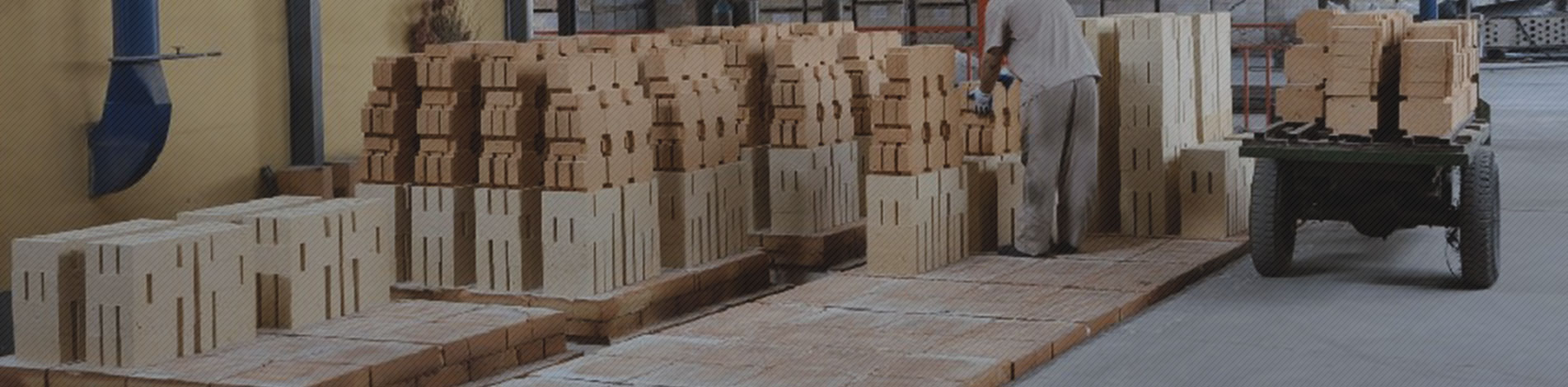

Highland Refractory manufactures a comprehensive portfolio of high-performance unshaped monolithic castables designed to replace jointed shaped refractory bricks in severe industrial thermal equipment. Engineered from high-purity bauxite, calcined tabular alumina, silicon carbide, and calcium aluminate binders, our castables operate reliably from 1300°C to 1800°C under intense molten slag erosion, cyclic thermal shock, and mechanical abrasion.
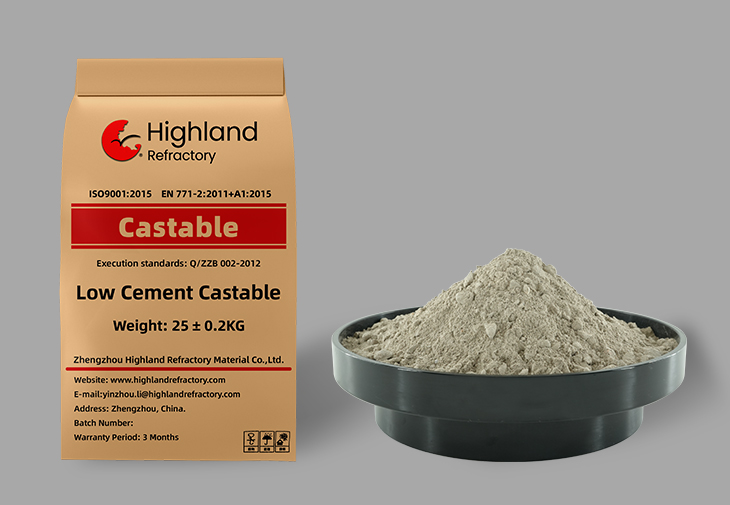

White corundum castable is a high-quality high-temperature refractory material with high-purity alumina powder as the main raw material.

Lightweight insulation castable is a refractory with low density and excellent insulation properties.

Corundum mullite castable is a high-quality high-performance refractory material with high thermal conductivity, insulation, good chemical stability and resistance to reducing agents.

Silicon carbide castable is an amorphous refractory material with silicon carbide as the main component.
White corundum castable is a high-quality high-temperature refractory material with high-purity alumina powder as the main raw material.
Lightweight insulation castable is a refractory with low density and excellent insulation properties.
Corundum mullite castable is a high-quality high-performance refractory material with high thermal conductivity, insulation, good chemical stability and resistance to reducing agents.
Silicon carbide castable is an amorphous refractory material with silicon carbide as the main component.
Highland Refractory manufactures a comprehensive portfolio of high-performance unshaped monolithic castables designed to replace jointed shaped refractory bricks in severe industrial thermal equipment. Engineered from high-purity bauxite, calcined tabular alumina, silicon carbide, and calcium aluminate binders, our castables operate reliably from 1300°C to 1800°C under intense molten slag erosion, cyclic thermal shock, and mechanical abrasion.
Castable refractory is a ready-to-use, dry unshaped monolithic refractory mixture consisting of graded refractory aggregates (60%–70%), fine matrix powders (20%–30%), mineral admixtures, and hydraulic calcium aluminate binders. When combined with a strictly measured dosage of clean potable water on-site, it forms a dense, flowable, or vibratable slurry that hardens via hydraulic hydration and subsequent high-temperature ceramic sintering.
Unlike traditional pre-fired high alumina fire bricks, refractory castables are installed directly into place via casting, vibration, or pneumatic shotcreting. This creates a continuous, joint-free lining that conforms perfectly to irregular furnace contours, burner throats, roof arches, and water-cooled pipe penetrations. For furnace engineers, switching to engineered castables reduces installation downtime by up to 50% while mitigating the structural risks associated with joint failure.

Highland Refractory categorizes monolithic castables based on cement content, aggregate chemistry, and specialized performance modifiers to meet distinct thermal and mechanical operating envelopes:
Formulated with dense calcined bauxite and conventional calcium aluminate cement (CaO 6%–10%). Best suited for general-purpose furnace linings, incinerator walls, boiler baffles, and chimney flues operating between 1300°C and 1500°C with standard vibration casting.
Engineered with micro-silica, reactive alumina, and dispersants, lowering CaO content to 1.0%–2.5%. Reduces water demand to 4.5%–6.0%, virtually eliminating intermediate temperature strength loss and providing high density and superior slag corrosion resistance up to 1650°C.
Composed of white fused corundum, brown corundum, or sintered mullite aggregates with Al2O3 ≥ 85%–95%. Designed for extreme conditions (up to 1800°C) such as steel ladle working linings, blast furnace iron troughs, and chemical gasifier hot faces.
Incorporates 2%–4% heat-resistant stainless steel fibers (SUS304, SUS310S). Restricts micro-crack propagation under extreme thermal cycling and mechanical vibration, widely used in cement kiln discharge ports, cooler nose rings, and boiler burner blocks.
Blended with premium black or green SiC aggregates. Delivers outstanding thermal conductivity, thermal shock resistance, and non-wetting properties against non-ferrous metals and coal-fired circulating fluidized bed (CFB) boiler cyclone abrasion.
Manufactured using expanded vermiculite, perlite, or lightweight high-alumina porous grog. Delivers bulk densities between 0.8 and 1.5 g/cm³ with ultra-low thermal conductivity, serving as energy-saving backup insulation behind dense hot-face linings.
The following performance matrix details Highland's benchmark industrial castable formulations. All parameters reflect verified quality inspection standards compliant with ISO 9001 and ASTM testing protocols:
| Product Code | Castable Type | Al2O3 (%) | Fe2O3 (%) | Bulk Density (g/cm³) | CCS @ 110°C (MPa) | CCS Fired (MPa) | Max Service Temp (°C) | Recommended Water (%) |
|---|---|---|---|---|---|---|---|---|
| HNR-CA65 | Standard High Alumina | ≥ 65 | ≤ 2.2 | 2.35 – 2.45 | ≥ 40 | ≥ 60 (1350°C) | 1450 | 7.5 – 8.5 |
| HNR-CA75 | Dense High Alumina | ≥ 75 | ≤ 1.8 | 2.50 – 2.60 | ≥ 50 | ≥ 75 (1450°C) | 1550 | 7.0 – 8.0 |
| HNR-LCC70 | Low Cement Castable (LCC) | ≥ 70 | ≤ 1.5 | 2.60 – 2.70 | ≥ 65 | ≥ 85 (1500°C) | 1600 | 5.0 – 6.0 |
| HNR-LCC80 | High-Strength LCC | ≥ 80 | ≤ 1.2 | 2.75 – 2.85 | ≥ 75 | ≥ 95 (1550°C) | 1650 | 4.5 – 5.5 |
| HNR-COR95 | Tabular Corundum Castable | ≥ 95 | ≤ 0.3 | 2.95 – 3.05 | ≥ 85 | ≥ 110 (1600°C) | 1800 | 4.0 – 5.0 |
| HNR-SIC60 | Silicon Carbide Wear-Resistant | ≥ 25 (SiC ≥ 60) | ≤ 1.0 | 2.55 – 2.65 | ≥ 70 | ≥ 90 (1400°C) | 1500 | 5.5 – 6.5 |
| HNR-INS12 | Lightweight Insulating | ≥ 40 | ≤ 2.5 | 1.15 – 1.25 | ≥ 10 | ≥ 15 (1100°C) | 1250 | 16.0 – 20.0 |
*Note: Technical figures represent typical laboratory testing values. Tailored grain size distributions, steel fiber additions, and rapid-hardening formulations can be customized upon request. Contact our engineering team for exact batch Test Data Sheets (TDS).

Monolithic castables serve critical engineering functions across heavy manufacturing. Choosing the appropriate formulation requires matching slag chemistry, temperature profile, and mechanical stress:
In secondary metallurgy, molten steel contact demands extreme refractoriness and non-wetting properties. Tabular corundum and spinel-bonded LCC castables (such as HNR-COR95) are deployed in steel ladle bottom impact zones, ladle well blocks, and tundish weir baffles. For comprehensive ladle lining architecture, refer to our steel ladle refractory lining zonation guide.
Cement plant clinker lines expose refractories to severe alkali volatile condensation (K2O, Na2O, SO3) and high clinker abrasion. Our steel-fiber reinforced and low cement high-alumina castables are specified for the kiln tertiary air duct elbows, riser ducts, calciner cones, and clinker cooler bullnoses where mechanical spalling is severe.
Circulating Fluidized Bed (CFB) boilers utilize high-velocity circulating sand beds for combustion heat transfer. This causes intense abrasive wear on the water-wall refractory interface and separator cyclones. Highland's high-purity silicon carbide and dense corundum castables resist constant particle impingement without thinning or spalling.
In metal forging furnaces and petrochemical reformers, monolithic castables form energy-efficient furnace roofs, burner blocks, and hearth curbs. By utilizing low-cement binder technology coupled with our calcium aluminate refractory cement, linings endure frequent door-opening thermal shocks without cracking.
While shaped firebricks remain standard for regular geometric walls, castable refractories provide superior technical and commercial value in complex zones:
| Evaluation Parameter | Highland Monolithic Castables | Traditional Shaped Refractory Bricks |
|---|---|---|
| Joint Integrity | 100% Joint-Free: Eliminates mortar joints, preventing corrosive chemical penetration and heat short-circuiting. | Multiple Mortar Joints: Mortar joints represent the weakest mechanical and thermal points susceptible to slag cut. |
| Geometric Flexibility | Unlimited: Pours seamlessly around complex water-cooling pipes, burner ports, anchor studs, and roof domes. | Restricted: Requires costly specialized wooden/metal molds for customized wedge, arch, or radius bricks. |
| Installation Speed | Rapid: High-tonnage pump casting or pneumatic shotcreting cuts shutdown downtime by 30%–50%. | Labor-Intensive: Manual brick-by-brick masonry requires skilled bricklayers and lengthy alignment times. |
| Thermal Shock Resistance | High: Micro-pore network and optional steel fiber integration absorb cyclic thermal strains effectively. | Moderate: Rigid pre-fired brick structures may spall along cleavage planes under fast cycling. |
| Storage & Transport | Zero Breakage Risk: Dry bagged powder eliminates shipping breakage (traditional brick breakage rate can reach 2%–5%). | Breakage Risk: Vulnerable to edge chipping and transit vibration damage during ocean freight. |
Over 75% of premature castable failures originate not from raw material defects, but from on-site water overdosage, improper anchor spacing, or rushed initial furnace dry-out.

To preserve raw chemical reactivity and prevent pre-hydration during maritime transport, Highland maintains rigorous packaging and export quality standards:
Conventional castables rely on high cement additions (15%–25%), creating a hydration network that loses substantial mechanical strength in the critical intermediate temperature zone (800°C–1100°C) where cement dehydrates before ceramic bonding begins. Low Cement Castables (LCC) contain only 3%–8% cement combined with reactive micro-silica and alumina fillers. This reduces water demand, minimizes total porosity (<16%), and prevents the intermediate strength dip, resulting in far superior hot modulus of rupture and slag resistance.
For operating temperatures below 1500°C with moderate chemical erosion (such as boilers, kiln preheaters, and flue gas ducts), high-alumina castables (Al2O3 60%–75%) provide the highest cost-to-performance ratio. If your furnace operates above 1550°C or contacts molten iron, liquid steel, or highly aggressive basic/acidic slags, tabular corundum castable (Al2O3 ≥ 90%–95%) is mandatory to resist chemical dissolution and wear.
Yes, but surface preparation is crucial. The old substrate must be thoroughly chipped back to clean, sound refractory material, clearing all vitrified slag, scale, dust, and carbon soot. Welding fresh stainless steel anchors or applying a specialized refractory bonding mortar slurry onto the damp interface ensures proper mechanical and chemical keying.
When stored in original, unopened waterproof packaging inside a dry, elevated, and well-ventilated warehouse (ambient temperature 5°C–30°C), Highland castables maintain full chemical activity for 6 to 9 months from the production date. In high-humidity tropical ports, we recommend utilizing the material within 6 months.
To provide an accurate technical recommendation and FOB/CIF quotation, please share: (1) Target equipment and specific furnace zone, (2) Maximum and continuous operating temperatures, (3) Slag or chemical atmosphere composition, (4) Preferred installation method (vibrating, gunning, or self-flowing), and (5) Estimated tonnage and target delivery port.
Eliminate premature furnace lining failures with Highland's customized monolithic formulations. From heavy-duty steel ladle corundum to rapid-hardening kiln repair castables, our technical engineering team in Zhengzhou provides full material selection and dry-out consulting.
CONTACT OUR REFRACTORY ENGINEERS →Direct Factory Pricing • Fast Sampling (5–10 kg test batches) • Rapid Qingdao Port Dispatch
