
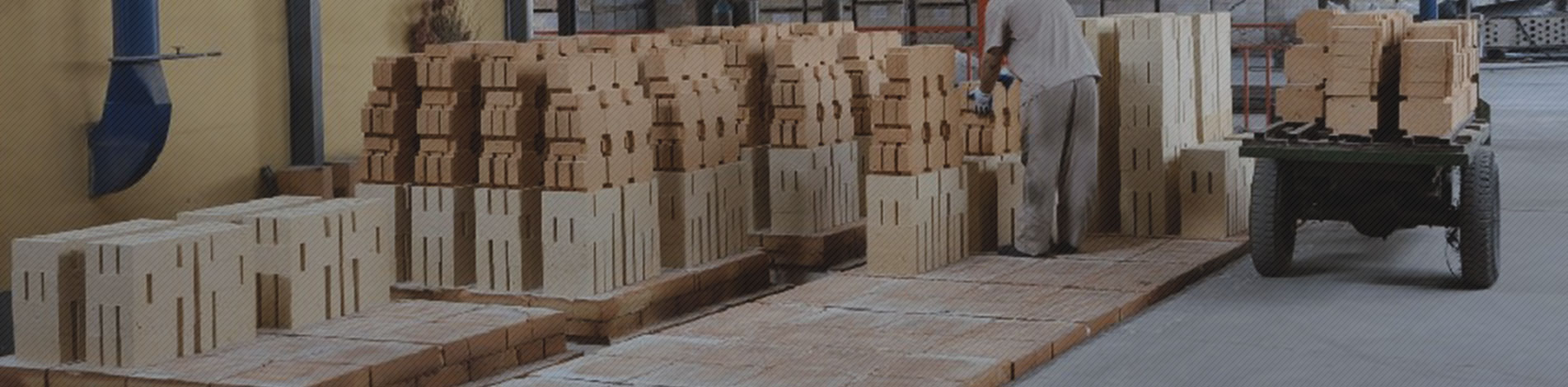

Highland Refractory's Mullite Castable Series covers mullite-based monolithic refractory solutions for high-temperature industrial applications. The series is organized around different material systems and service requirements, allowing buyers to review the appropriate product direction before moving to a specific technical specification.
Depending on the required performance, the product range can include conventional Mullite Castable, Corundum Mullite Castable, and project-specific mullite-based formulations. This page is designed as a product-family guide: use it to compare product directions, understand the main selection factors, and then move to the individual product page for detailed technical data.

Corundum mullite castable is a high-quality high-performance refractory material with high thermal conductivity, insulation, good chemical stability and resistance to reducing agents.
Corundum mullite castable is a high-quality high-performance refractory material with high thermal conductivity, insulation, good chemical stability and resistance to reducing agents.
The Mullite Castable Series is a group of mullite-based refractory castables designed for high-temperature furnace and kiln linings. Different formulations can be selected according to thermal exposure, mechanical loading, thermal cycling, chemical environment, and installation conditions. Mullite Castable and Corundum Mullite Castable belong to different product directions within this broader material family. For purchasing decisions, review the series first, then confirm the exact grade, chemistry, physical properties, and application limits on the corresponding product page.
Mullite castable is a monolithic refractory material based on a mullite-rich refractory system. Unlike pre-fired bricks, castables are installed in an unshaped form and develop their final structure through mixing, placement, curing, and controlled drying or firing according to the selected formulation and installation method.
The term mullite castable therefore describes a material family rather than a single fixed recipe. Its performance depends on the aggregate system, binder system, particle distribution, alumina-silica balance, density, and other formulation variables. Industrial users normally select a specific product according to the operating environment rather than by material name alone.
Within a mullite castable series, different formulations may target different combinations of thermal stability, mechanical strength, dimensional stability, thermal cycling performance, and resistance to the surrounding process environment. This is why a product-family page should be used to identify the appropriate material direction before the final grade is specified.
The product range is organized so that buyers can move from a broad material requirement to a specific product. Each product direction has a different role in the selection process, while detailed technical specifications remain on the individual product pages.
A mullite-based refractory castable for projects where the required material system centers on mullite and the application calls for a suitable balance of thermal stability and mechanical performance.
Buyers should review the product specification against the intended operating temperature, loading conditions, thermal cycling, and installation method.
View Mullite CastableA corundum-mullite refractory system intended for applications where a denser, high-alumina material direction and the associated mechanical and thermal characteristics need to be evaluated.
Exact chemical composition and physical properties should be confirmed from the individual product specification rather than inferred from the product-family page.
View Corundum Mullite CastableSome refractory projects have requirements that cannot be evaluated from material family names alone. In these cases, the formulation can be assessed against the furnace zone, thermal profile, installation process, and required physical properties.
Project information should be supplied before a customized specification is considered.
Discuss a Project RequirementThe following comparison is intended to explain the role of each product direction in the series. It is not a performance ranking. The appropriate material depends on the service conditions of the refractory lining.
| Product Direction | Material Focus | Typical Selection Need | Main Review Points | Next Step |
|---|---|---|---|---|
| Mullite Castable | Mullite-based refractory system | General high-temperature lining requirements | Temperature, strength, thermal stability, installation method | Review product |
| Corundum Mullite Castable | Corundum + mullite system | Applications requiring a denser, high-alumina material direction | Strength, thermal cycling, dimensional stability, chemical environment | Review product |
| Customized Mullite-Based Castable | Project-specific mullite-based formulation | Special service or installation requirements | Actual operating conditions, required properties, installation process | Discuss requirements |
Choosing a mullite refractory castable should begin with the service conditions rather than the product name. A technical review normally considers the following factors together.
A useful purchasing process is to define the refractory zone first, identify the dominant wear mechanism, and then compare the relevant mullite-based castable specifications. This prevents a common mistake in which a material is selected only because it contains mullite without considering the complete service environment.
Mullite refractory castables can be evaluated for different industrial furnace and kiln environments where high-temperature structural stability and the required combination of thermal and mechanical properties are needed. The exact application depends on the formulation and the operating conditions.
Mullite-based castables may be considered for selected high-temperature refractory zones in metallurgical equipment where the material must withstand elevated temperatures together with mechanical and thermal stresses. The actual furnace position should determine the required grade and physical properties.
In cement and related high-temperature processing equipment, monolithic refractory materials can be used in selected furnace or kiln areas according to temperature, abrasion, thermal cycling, and chemical exposure. Mullite-based products should be evaluated against the specific process zone rather than applied uniformly across the entire lining.
Selected furnace, boiler, combustion-related, and other high-temperature components may require castables with appropriate thermal and mechanical characteristics. The suitable mullite castable depends on the actual temperature profile, thermal cycling, and process atmosphere.
High-temperature industrial equipment may contain local zones where a mullite-based castable is technically appropriate. In these projects, product selection should consider operating conditions, gas environment, mechanical loading, and installation requirements together.
Product-family selection should be followed by technical specification review. The most useful parameters depend on the application, but buyers commonly need to examine the following information before approving a mullite refractory castable.
| Parameter | Why It Matters |
|---|---|
| Al₂O₃ content | Helps define the alumina-rich character of the refractory material system and should be reviewed together with the complete chemical composition. |
| Bulk density | Provides information about the installed material structure and should be considered together with the intended lining function. |
| Cold compressive strength | Useful for evaluating mechanical strength under the specified testing condition. |
| Bending strength | Helps assess resistance to flexural stress under the stated test condition. |
| Heating linear change | Important when dimensional stability is critical during high-temperature service. |
| Thermal shock resistance | Relevant to equipment exposed to repeated or rapid temperature changes. |
| Maximum service temperature | Should be checked against the actual operating envelope and not treated as a substitute for application-specific evaluation. |
A practical way to navigate the product range is to start with the requirement and then move to the corresponding product page. The table below is a selection guide, not a product ranking.
| Application or Requirement | Product Direction to Review | What to Confirm |
|---|---|---|
| General mullite-based high-temperature lining | Mullite Castable | Operating temperature, strength, thermal stability, installation method |
| Higher-density or high-alumina refractory requirement | Corundum Mullite Castable | Chemical composition, density, strength, thermal and chemical environment |
| Special process or project requirements | Customized evaluation | Full operating conditions, refractory location, installation process, required properties |
For industrial procurement, the objective is not only to identify a mullite castable supplier but to confirm that the selected material matches the project specification. Buyers should prepare enough information for the refractory supplier to identify the appropriate product direction and provide the correct technical documentation.
| Information to Confirm | Typical Procurement Question |
|---|---|
| Product | Which mullite castable type and grade is being quoted? |
| Technical specification | Does the quoted product have a current TDS with the required chemical and physical properties? |
| Application | Where will the material be installed, and what is the operating temperature? |
| Installation | Will the castable be mixed, cast, vibrated, pumped, cured, or installed by another method? |
| Quantity | What is the required project quantity and delivery schedule? |
| Quality documentation | Which product documents and inspection requirements are needed for project approval? |
Providing the operating conditions and required quantity at the quotation stage can make product selection more precise and helps prevent unsuitable generic grades from being evaluated simply on price.
Mullite castable is used for selected high-temperature industrial refractory linings where the required combination of thermal stability, mechanical performance, dimensional stability, and process resistance can be achieved by a mullite-based material system. The exact application depends on the formulation and service conditions.
Mullite Castable and Corundum Mullite Castable represent different material directions. Corundum Mullite Castable incorporates a corundum-mullite system, while a conventional Mullite Castable is based more directly on a mullite-centered refractory formulation. The appropriate choice depends on the required material characteristics and operating environment.
Start with the actual refractory zone and review service temperature, thermal cycling, mechanical load, chemical exposure, and installation method. The selected product should then be checked against the current technical specification for its grade.
Depending on the application, buyers may need to review chemical composition, bulk density, compressive strength, bending strength, heating linear change, thermal shock characteristics, maximum service temperature, and other project-specific requirements.
Project-specific evaluation can be considered where the service conditions require a particular combination of thermal, mechanical, chemical, or installation characteristics. The operating conditions and application details should be provided before a customized formulation is evaluated.
Use the relevant product detail page for the selected material direction. For example, the dedicated Mullite Castable and Corundum Mullite Castable pages provide product-specific information rather than relying on general series-level descriptions.
Share the operating temperature, refractory location, installation method, service conditions, and required quantity with Highland Refractory. These details can be used to identify the appropriate mullite-based castable product direction and the corresponding technical specification for evaluation.
Request a Mullite Castable Recommendation