
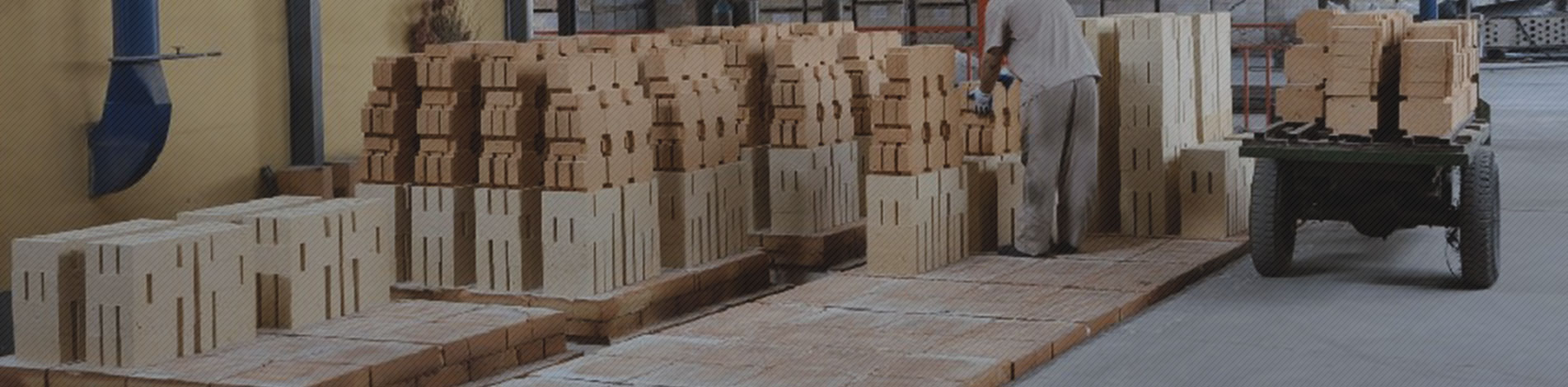

Highland Refractory delivers premium High Alumina Castables—versatile, high-performance refractory castables engineered from high-purity alumina aggregates (60–90% Al₂O₃ content) and advanced binders for extreme high-temperature environments. These high alumina refractory castables boast a continuous operating temperature up to 1750℃, cold crushing strength ≥80MPa, and excellent thermal shock resistance, maintaining structural integrity under rapid temperature fluctuations.
Ideal for metallurgy, petrochemical, power generation, and cement industries, they excel in lining industrial kilns, steel ladles, boiler chambers, high-temperature reactors, and furnace walls. As trusted alumina castables, they offer easy pourable installation to eliminate heat-leaking gaps, while their superior wear and corrosion resistance extends equipment lifespan and reduces maintenance downtime. Highland Refractory’s High Alumina Castables balance reliability and cost-efficiency, providing global procurement teams and end-users a durable solution that drives operational stability and long-term savings.

High Alumina Castable refers to a refractory castable with Al2O3 content greater than 48%.
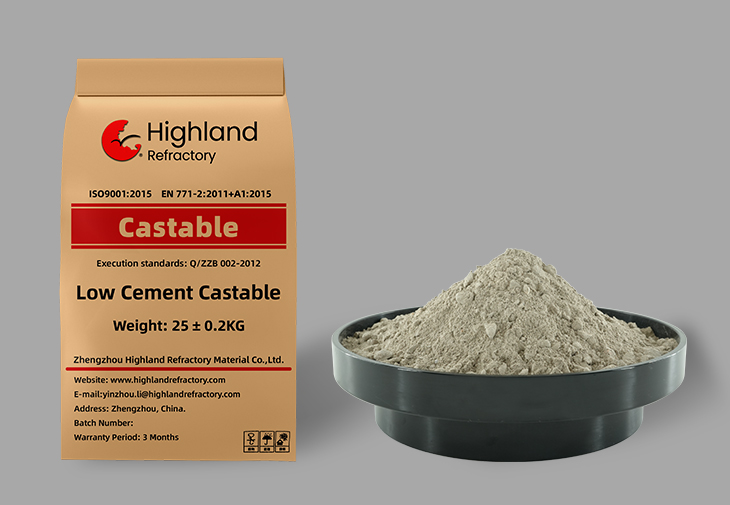

High Alumina Castable Manufacturer & Supplier in China Factory-direct high alumina castable supply for steel, cement, industrial furnaces, kilns and other high-temperature applications. Highland Refractory provides standard grades, customized formulations, technical documentation and bulk supply for international B2B buyers. Whether you are a refractory distributor, steel plant, furnace contractor, EPC company or industrial buyer, we can review your operating conditions and recommend a suitable high alumina castable solution based on the actual lining application rather than Al₂O₃ content alone. Discuss Your Specification China Factory Supply Direct communication with a refractory manufacturing team. Standard & Custom Grades Material selection based on grade, formulation and working conditions. Bulk & Project Supply Support for recurring procurement and industrial project requirements. High Alumina Castable Manufacturer for Global B2B Buyers Choosing a refractory castable supplier is different from choosing a standard industrial commodity. High alumina castable performance depends on raw materials, particle-size distribution, binder design, additives, installation conditions and the service environment. For this reason, industrial buyers often need more than a product name and a nominal alumina percentage. As a high alumina castable manufacturer and supplier in China, Highland Refractory supports customers that need standard refractory castables as well as application-specific material recommendations. Our...

Home > Monolithic Refractories > High Alumina Castables > High Alumina Castable Applications High alumina castables are used in a wide range of high-temperature industrial equipment where a monolithic refractory lining is required. However, the application is often more important than the material name alone. A high alumina castable application can involve a furnace wall, kiln zone, boiler component, steelmaking equipment or a localized repair area, and each location can have different thermal, mechanical and chemical requirements. The main industrial applications of high alumina castables include furnaces, kilns, boilers and steel plants. Within each equipment category, the refractory requirements can change according to temperature, abrasion, erosion, chemical exposure, geometry and installation method. This is why the same high alumina castable grade should not automatically be applied to every zone of a furnace or production line. Industrial Furnaces Used in selected furnace walls, floors, burner areas, hot zones and repair sections where a durable monolithic lining is required. Kilns Considered for selected rotary kiln and process kiln zones exposed to heat, abrasion, erosion and thermal cycling. Boilers Used in selected boiler furnace areas and high-temperature sections where thermal and erosion conditions require a suitable refractory lining. Steel Plants Applied in selected...

Home > Monolithic Refractories > High Alumina Castables > High Alumina Castable Types High alumina castables are not a single refractory formulation. They can be designed with different material structures, binder systems and installation characteristics according to the service conditions of the lining. For engineers and refractory buyers, understanding the main high alumina castable types makes it easier to compare materials before selecting a specific grade or product. Among the most commonly discussed types are dense high alumina castable, high alumina low cement castable and high alumina self-flowing castable. These terms do not always describe completely separate product families. In practice, they can describe different characteristics of the same castable system. A high alumina castable may be dense, low cement and self-flowing at the same time, depending on its formulation. Dense High Alumina Castable Focuses on a dense refractory structure and is commonly considered where mechanical durability, erosion resistance and a robust lining structure are important. Low Cement High Alumina Castable Uses a reduced-cement binder design to improve the balance of physical and thermal properties compared with conventional cement-bonded systems. Self-Flowing High Alumina Castable Is designed around flowability and installation behavior, helping the material fill suitable forms under controlled placement...

Home › Monolithic Refractories › High Alumina Castables › High Alumina Castable Properties Understanding high alumina castable properties is essential when selecting a monolithic refractory for furnace, kiln and other high-temperature industrial equipment. Alumina content is only one part of the evaluation. Density, cold compressive strength, thermal behavior, chemical resistance, abrasion resistance and volume stability can all affect whether a castable is suitable for a particular lining zone. This guide explains the main technical properties of high alumina refractory castables and shows how engineers and purchasing teams can interpret these parameters when comparing refractory materials. The technical examples in this article use Highland Refractory’s currently listed HA-60, HA-75 and HA-85 grades as reference points. 60–85% Al₂O₃ in Listed HA Grades 2.40–2.85 Bulk Density, g/cm³ ≥ 60–100 CCS, MPa ≥ 1600–1780°C Listed Maximum Service Temperature VIEW HIGH ALUMINA CASTABLE TECHNICAL DATA High Alumina Castable Properties Guide 1. Property overview What Are the Properties of High Alumina Castable? 2. Composition High Alumina Castable Composition 3. Density High Alumina Castable Density 4. Strength High Alumina Castable Strength 5. Thermal properties Thermal Properties of High Alumina Castable 6. Chemical & wear resistance Chemical, Slag and Abrasion Resistance 7. Grade comparison HA-60 vs HA-75 vs...
High Alumina Castable refers to a refractory castable with Al2O3 content greater than 48%.
High Alumina Castable Manufacturer & Supplier in China Factory-direct high alumina castable supply for steel, cement, industrial furnaces, kilns and other high-temperature applications. Highland Refractory provides standard grades, customized formulations, technical documentation and bulk supply for international B2B buyers. Whether you are a refractory distributor, steel plant, furnace contractor, EPC company or industrial buyer, we can review your operating conditions and recommend a suitable high alumina castable solution based on the actual lining application rather than Al₂O₃ content alone. Discuss Your Specification China Factory Supply Direct communication with a refractory manufacturing team. Standard & Custom Grades Material selection based on grade, formulation and working conditions. Bulk & Project Supply Support for recurring procurement and industrial project requirements. High Alumina Castable Manufacturer for Global B2B Buyers Choosing a refractory castable supplier is different from choosing a standard industrial commodity. High alumina castable performance depends on raw materials, particle-size distribution, binder design, additives, installation conditions and the service environment. For this reason, industrial buyers often need more than a product name and a nominal alumina percentage. As a high alumina castable manufacturer and supplier in China, Highland Refractory supports customers that need standard refractory castables as well as application-specific material recommendations. Our...
Home > Monolithic Refractories > High Alumina Castables > High Alumina Castable Applications High alumina castables are used in a wide range of high-temperature industrial equipment where a monolithic refractory lining is required. However, the application is often more important than the material name alone. A high alumina castable application can involve a furnace wall, kiln zone, boiler component, steelmaking equipment or a localized repair area, and each location can have different thermal, mechanical and chemical requirements. The main industrial applications of high alumina castables include furnaces, kilns, boilers and steel plants. Within each equipment category, the refractory requirements can change according to temperature, abrasion, erosion, chemical exposure, geometry and installation method. This is why the same high alumina castable grade should not automatically be applied to every zone of a furnace or production line. Industrial Furnaces Used in selected furnace walls, floors, burner areas, hot zones and repair sections where a durable monolithic lining is required. Kilns Considered for selected rotary kiln and process kiln zones exposed to heat, abrasion, erosion and thermal cycling. Boilers Used in selected boiler furnace areas and high-temperature sections where thermal and erosion conditions require a suitable refractory lining. Steel Plants Applied in selected...
Home > Monolithic Refractories > High Alumina Castables > High Alumina Castable Types High alumina castables are not a single refractory formulation. They can be designed with different material structures, binder systems and installation characteristics according to the service conditions of the lining. For engineers and refractory buyers, understanding the main high alumina castable types makes it easier to compare materials before selecting a specific grade or product. Among the most commonly discussed types are dense high alumina castable, high alumina low cement castable and high alumina self-flowing castable. These terms do not always describe completely separate product families. In practice, they can describe different characteristics of the same castable system. A high alumina castable may be dense, low cement and self-flowing at the same time, depending on its formulation. Dense High Alumina Castable Focuses on a dense refractory structure and is commonly considered where mechanical durability, erosion resistance and a robust lining structure are important. Low Cement High Alumina Castable Uses a reduced-cement binder design to improve the balance of physical and thermal properties compared with conventional cement-bonded systems. Self-Flowing High Alumina Castable Is designed around flowability and installation behavior, helping the material fill suitable forms under controlled placement...
Home › Monolithic Refractories › High Alumina Castables › High Alumina Castable Properties Understanding high alumina castable properties is essential when selecting a monolithic refractory for furnace, kiln and other high-temperature industrial equipment. Alumina content is only one part of the evaluation. Density, cold compressive strength, thermal behavior, chemical resistance, abrasion resistance and volume stability can all affect whether a castable is suitable for a particular lining zone. This guide explains the main technical properties of high alumina refractory castables and shows how engineers and purchasing teams can interpret these parameters when comparing refractory materials. The technical examples in this article use Highland Refractory’s currently listed HA-60, HA-75 and HA-85 grades as reference points. 60–85% Al₂O₃ in Listed HA Grades 2.40–2.85 Bulk Density, g/cm³ ≥ 60–100 CCS, MPa ≥ 1600–1780°C Listed Maximum Service Temperature VIEW HIGH ALUMINA CASTABLE TECHNICAL DATA High Alumina Castable Properties Guide 1. Property overview What Are the Properties of High Alumina Castable? 2. Composition High Alumina Castable Composition 3. Density High Alumina Castable Density 4. Strength High Alumina Castable Strength 5. Thermal properties Thermal Properties of High Alumina Castable 6. Chemical & wear resistance Chemical, Slag and Abrasion Resistance 7. Grade comparison HA-60 vs HA-75 vs...
High alumina castables are alumina-based monolithic refractory materials designed for selected high-temperature industrial lining applications. Unlike pre-shaped refractory bricks, castables are supplied as unshaped materials and installed directly into the required furnace, kiln or equipment section.
Highland Refractory's high alumina castable series includes different alumina grades for different refractory requirements. The current standard grade range includes HA-60, HA-75 and HA-85, allowing buyers to compare materials according to alumina level, application conditions and project requirements.
| 1. Product series | High Alumina Castable Series |
| 2. Grade comparison | High Alumina Castable Grade Overview |
| 3. Castable types | Castable Types and Formulation Options |
| 4. Applications | Industrial Applications |
| 5. Selection | How to Choose a High Alumina Castable |
| 6. Resources | Technical Resources |
| 7. Supplier | High Alumina Castable Supplier |
| 8. FAQ | High Alumina Castables FAQ |
High alumina castables are commonly selected when a project requires an alumina-based monolithic refractory lining rather than individual shaped refractory bricks. Castable systems can be installed around complex geometries, repair areas and selected furnace structures where monolithic construction is suitable.
The main difference within a high alumina castable series is the material grade and formulation. Alumina content provides an important starting point for comparison, but the final selection should also consider temperature, mechanical loading, abrasion, thermal cycling, chemical exposure and installation method.

HA-60 is the standard lower-alumina grade within the current listed Highland range, with Al₂O₃ content of ≥60%. It can be considered for general high-temperature refractory lining requirements where the application does not require a higher alumina grade.
HA-75 contains ≥75% Al₂O₃ and provides a higher alumina option for projects where a more alumina-rich refractory composition is required.
HA-85 is the highest standard alumina grade listed in this series, with ≥85% Al₂O₃. It can be evaluated for applications requiring a high-alumina refractory composition and demanding service conditions.
Alumina content is one of the most visible differences between high alumina castable grades. It provides a useful initial basis for comparison, but buyers should evaluate the complete technical specification before selecting a material for a furnace or kiln lining.
| Grade | Al₂O₃ Content | Grade Positioning | Selection Focus |
|---|---|---|---|
| HA-60 | ≥60% | Standard high alumina grade | General high-temperature refractory lining requirements |
| HA-75 | ≥75% | Higher alumina grade | Applications requiring a higher alumina refractory composition |
| HA-85 | ≥85% | High alumina grade | Demanding applications where high alumina content is an important material requirement |
For the complete density, cold compressive strength and service-temperature values of HA-60, HA-75 and HA-85, see the High Alumina Castable technical specification .
In addition to alumina content, castables can be differentiated according to formulation and installation characteristics. These differences can affect flowability, installation requirements, curing procedures and suitability for particular lining designs.
Dense high alumina castables can be considered where a compact monolithic refractory lining is required. Grade selection should be based on the actual thermal and mechanical duty of the service zone.
Low cement castable is a related castable category designed around a reduced cement content compared with conventional formulations. Installation and curing requirements depend on the specific formulation.
Self-flowing castables are formulated for suitable flow during placement. Their suitability depends on lining geometry, accessibility, reinforcement, installation conditions and the product formulation.
Castable materials can also be used for selected refractory repair work. Repair material selection depends on repair thickness, application method, existing refractory structure and required heat-up conditions.
For more detailed information on castable classifications and formulation choices, visit the High Alumina Castable Types Guide .
High alumina castables can be evaluated for many high-temperature industrial systems where monolithic refractory construction is suitable. The correct material depends on the exact furnace section, thermal conditions, mechanical duty and chemical environment.
High alumina castables can be considered for selected steelmaking and metallurgical equipment where thermal resistance, mechanical strength and monolithic installation are required.
Selected castable grades can be evaluated for thermal equipment in non-ferrous metal processing where the refractory must match the process temperature, wear conditions and chemical environment.
High alumina castables can be considered for selected high-temperature zones in cement and building-material processing equipment where castable installation is appropriate.
Castable materials can be used for selected furnace linings, particularly where complex geometry or monolithic installation provides a practical advantage over individually shaped refractory bricks.
Selected high alumina castables can be evaluated for refractory linings in thermal and power-related equipment where elevated temperature, erosion or thermal cycling are relevant considerations.
Castable installation can be useful in localized refractory repair and geometrically complex lining areas. The appropriate repair formulation should be matched with the existing lining and operating environment.
Application-specific material selection is covered in the High Alumina Castable Applications Guide →

Choosing the right high alumina castable should begin with the actual operating conditions of the lining rather than simply selecting the grade with the highest alumina content.
Determine the normal operating temperature, maximum exposure and heating cycle. The selected castable should have technical data appropriate for the actual temperature range.
Different sections of the same furnace can experience very different conditions. Working linings, transition zones, repair areas and backup layers may require different refractory materials.
Consider abrasion, particle impact, compression, vibration and material movement. Mechanical conditions can be as important as temperature when choosing the refractory grade.
Slag, process gases, molten materials, alkalis, dust and other aggressive media can affect refractory performance. Chemical compatibility should be reviewed before finalizing the castable.
Conventional casting, vibration forming, pumping and self-flowing installation can involve different requirements. The installation method should therefore be considered together with the castable formulation.
Before procurement, compare the project requirements with the applicable TDS, including alumina content, density, strength, temperature data and any additional project-specific requirements.
For detailed discussion of density, composition, cold compressive strength and other material properties, see the High Alumina Castable Properties Guide .
This page is designed to act as the navigation hub for Highland's high alumina castables. Use the following resources to move from product-series selection to detailed technical evaluation.

Detailed technical information for the HA-60, HA-75 and HA-85 standard grades, including key physical and service parameters.
View High Alumina Castable →A technical resource covering important selection factors such as composition, density, strength and refractory performance.
Read Properties Guide →Explore application-specific considerations for furnaces, kilns and other high-temperature industrial equipment.
Explore Applications →Learn about dense, low cement, self-flowing and other castable formulation and installation options.
Explore Castable Types →Highland Refractory supplies high alumina castables for industrial and project-based refractory applications. The series includes different alumina grades intended for selected high-temperature furnace, kiln and process-equipment applications.
For B2B purchasing, material selection should be based on the technical requirements of the actual project. Buyers should identify the furnace or equipment type, lining position, operating temperature, mechanical conditions, chemical environment and installation method before confirming the final grade.
Customers searching for a high alumina castable supplier or high alumina castable manufacturer can submit these project details for technical evaluation and quotation.
High alumina castables are alumina-based unshaped refractory materials used for selected high-temperature industrial linings. They are installed in castable form rather than as pre-shaped refractory bricks.
The standard grades covered in the Highland series include HA-60, HA-75 and HA-85, corresponding to minimum Al₂O₃ contents of 60%, 75% and 85%, respectively.
No. Alumina content is an important factor, but the correct castable also depends on operating temperature, lining position, mechanical wear, thermal cycling, chemical exposure and installation method.
High alumina castables can be evaluated for selected applications in steel and metallurgy, non-ferrous metal processing, cement and building-material equipment, industrial furnaces and other high-temperature systems.
This page is a product-series overview designed for grade comparison, application navigation and technical-resource access. The dedicated High Alumina Castable product page contains the detailed technical specifications for the individual grades.
Start with the operating temperature, lining location, mechanical load, chemical environment and installation method. Then compare these requirements with the technical specification of the available grade.
Send your furnace or kiln type, operating temperature, lining position, required Al₂O₃ content, lining thickness, installation method and estimated quantity. Highland Refractory can review the project requirements and provide the applicable high alumina castable information.
Home › Monolithic Refractories › High Alumina Castables › High Alumina Castable Properties Understanding high alumina castable properties is essential when selecting a monolithic refractory for furnace, kiln and other high-temperature industrial equipment. Alumina content is only one part of the evaluation. Density, cold compressive strength, thermal behavior, chemical resistance, abrasion resistance and volume stability can all affect whether a castable is suitable for a particular lining zone. This guide explains the main technical properties of high alumina refractory castables and shows how engineers and purchasing teams can interpret these parameters when comparing refractory materials. The technical examples in this article use Highland Refractory’s currently listed HA-60, HA-75 and HA-85 grades as reference points. 60–85% Al₂O₃ in Listed HA Grades 2.40–2.85 Bulk Density, g/cm³ ≥ 60–100 CCS, MPa ≥ 1600–1780°C Listed Maximum Service Temperature VIEW HIGH ALUMINA CASTABLE TECHNICAL DATA High Alumina Castable Properties Guide 1. Property overview What Are the Properties of High Alumina Castable? 2. Composition High Alumina Castable Composition 3. Density High Alumina Castable Density 4. Strength High Alumina Castable Strength 5. Thermal properties Thermal Properties of High Alumina Castable 6. Chemical & wear resistance Chemical, Slag and Abrasion Resistance 7. Grade comparison HA-60 vs HA-75 vs...
