
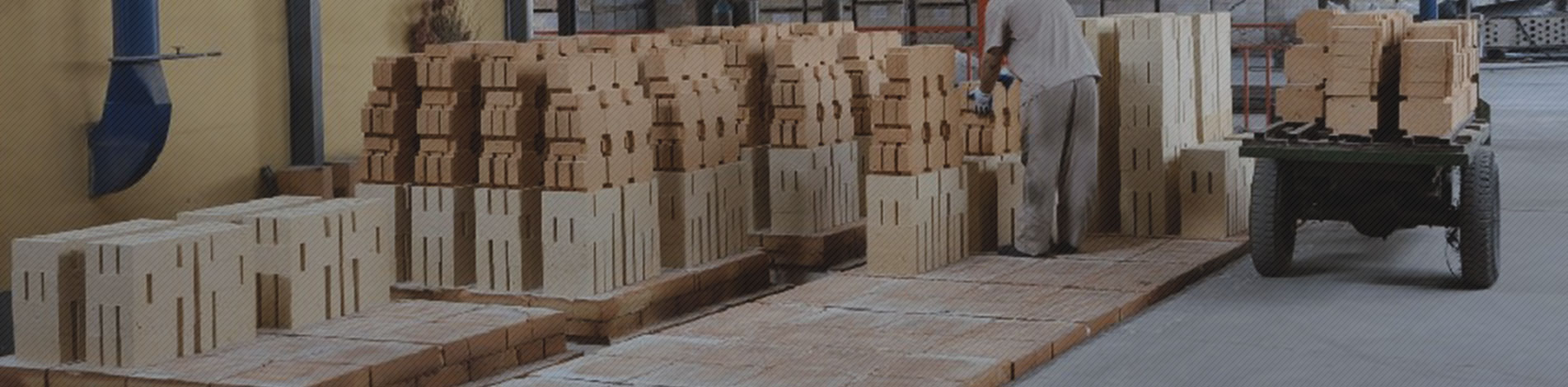

Highland Refractory's lightweight castable refractory series is designed for industrial applications where reduced bulk density, thermal insulation and application-specific refractory performance are important.
The current series includes KT-Q100 and KT-Q135 lightweight insulating castable grades, providing different combinations of alumina content, refractoriness, cold crushing strength and thermal conductivity.

Lightweight insulation castable is a refractory with low density and excellent insulation properties.

Learn how to evaluate a lightweight refractory castable manufacturer before ordering, including specification confirmation, quotation comparison, technical documents, incoming inspection, customization requirements and supplier communication.

A practical guide to lightweight refractory castable installation, covering material preparation, mixing, placement, curing, controlled dry-out and in-place inspection. Use the supplier's product-specific TDS and installation instructions for exact water addition, curing time and heat-up requirements.

Home / Castable Series / Lightweight Refractory Castable Applications Lightweight refractory castable is mainly used in selected insulating and back-up sections of industrial furnaces, heat treatment furnaces, kilns, boilers and other thermal equipment where reduced density and thermal insulation are important. Its suitability depends on the actual refractory location, operating temperature, thermal cycling, mechanical exposure and other service conditions. Quick Answer: The strongest application case for lightweight refractory castable is generally an insulating or back-up function rather than an automatically assumed hot-face role. Before selection, define where the material will be installed and what it will be exposed to. A grade suitable for a furnace wall insulation layer may not be appropriate for a zone exposed to severe abrasion, direct impact, aggressive chemical attack or molten material. Furnaces Walls, roofs and selected insulating sections Kilns Insulating and back-up zones Boilers Selected refractory and insulation sections Thermal Equipment Application-specific insulation requirements Key Takeaways Best suited to: insulating and back-up zones where reduced density and thermal insulation are important. Do not assume: lightweight castable is suitable for every hot-face application simply because the equipment operates at high temperature. Selection depends on: the operating temperature, refractory location, thermal cycling, mechanical exposure and atmosphere....

Home / Lightweight Castable Refractory / Lightweight Refractory Castable Properties Lightweight refractory castable should be evaluated as a combination of thermal, mechanical and dimensional properties rather than by density alone. For engineers, refractory contractors and industrial procurement teams, the most important data normally includes bulk density, thermal conductivity, refractoriness, cold crushing strength and heating linear change. These properties describe different aspects of material behavior. Bulk density relates to the weight and structure of the castable, thermal conductivity indicates heat transfer, refractoriness describes resistance to high-temperature exposure under a defined test basis, cold crushing strength indicates mechanical integrity, and heating linear change provides information about dimensional stability. Highland Refractory’s lightweight insulating castable range currently includes KT-Q100 and KT-Q135. Their specifications provide a practical example of why technical data should be evaluated as a complete set. Both grades have a specified bulk density of no more than 1.0 g/cm³, but they differ in alumina content, refractoriness, cold crushing strength, thermal conductivity and heating linear change. ≤ 1.0 g/cm³ Specified maximum bulk density for KT-Q100 and KT-Q135 ≤ 0.21 W/m·K KT-Q100 thermal conductivity at 350°C × 3 h ≥ 1300°C KT-Q135 specified minimum refractoriness ≥ 5 MPa KT-Q135 specified minimum cold crushing strength...
Lightweight insulation castable is a refractory with low density and excellent insulation properties.
Learn how to evaluate a lightweight refractory castable manufacturer before ordering, including specification confirmation, quotation comparison, technical documents, incoming inspection, customization requirements and supplier communication.
A practical guide to lightweight refractory castable installation, covering material preparation, mixing, placement, curing, controlled dry-out and in-place inspection. Use the supplier's product-specific TDS and installation instructions for exact water addition, curing time and heat-up requirements.
Home / Castable Series / Lightweight Refractory Castable Applications Lightweight refractory castable is mainly used in selected insulating and back-up sections of industrial furnaces, heat treatment furnaces, kilns, boilers and other thermal equipment where reduced density and thermal insulation are important. Its suitability depends on the actual refractory location, operating temperature, thermal cycling, mechanical exposure and other service conditions. Quick Answer: The strongest application case for lightweight refractory castable is generally an insulating or back-up function rather than an automatically assumed hot-face role. Before selection, define where the material will be installed and what it will be exposed to. A grade suitable for a furnace wall insulation layer may not be appropriate for a zone exposed to severe abrasion, direct impact, aggressive chemical attack or molten material. Furnaces Walls, roofs and selected insulating sections Kilns Insulating and back-up zones Boilers Selected refractory and insulation sections Thermal Equipment Application-specific insulation requirements Key Takeaways Best suited to: insulating and back-up zones where reduced density and thermal insulation are important. Do not assume: lightweight castable is suitable for every hot-face application simply because the equipment operates at high temperature. Selection depends on: the operating temperature, refractory location, thermal cycling, mechanical exposure and atmosphere....
Home / Lightweight Castable Refractory / Lightweight Refractory Castable Properties Lightweight refractory castable should be evaluated as a combination of thermal, mechanical and dimensional properties rather than by density alone. For engineers, refractory contractors and industrial procurement teams, the most important data normally includes bulk density, thermal conductivity, refractoriness, cold crushing strength and heating linear change. These properties describe different aspects of material behavior. Bulk density relates to the weight and structure of the castable, thermal conductivity indicates heat transfer, refractoriness describes resistance to high-temperature exposure under a defined test basis, cold crushing strength indicates mechanical integrity, and heating linear change provides information about dimensional stability. Highland Refractory’s lightweight insulating castable range currently includes KT-Q100 and KT-Q135. Their specifications provide a practical example of why technical data should be evaluated as a complete set. Both grades have a specified bulk density of no more than 1.0 g/cm³, but they differ in alumina content, refractoriness, cold crushing strength, thermal conductivity and heating linear change. ≤ 1.0 g/cm³ Specified maximum bulk density for KT-Q100 and KT-Q135 ≤ 0.21 W/m·K KT-Q100 thermal conductivity at 350°C × 3 h ≥ 1300°C KT-Q135 specified minimum refractoriness ≥ 5 MPa KT-Q135 specified minimum cold crushing strength...
Lightweight castable refractory is a category of monolithic refractory material used where the refractory system requires lower density and thermal insulation in addition to the performance required by its service location. Compared with dense refractory castables, lightweight formulations generally place greater emphasis on reducing material weight and limiting heat transfer.
Highland Refractory's current lightweight castable refractory range includes KT-Q100 and KT-Q135. Both grades have a specified bulk density of no more than 1.0 g/cm³, but their chemical and physical properties differ. KT-Q100 has a specified minimum refractoriness of 1100°C and a cold crushing strength of at least 2 MPa, while KT-Q135 has a specified minimum refractoriness of 1300°C and a cold crushing strength of at least 5 MPa.

The two products also have different reported thermal conductivity values under the specified test condition. This means the product series should be viewed as a range of application-specific options rather than a simple ranking from one grade to another.
Reduced bulk density can help lower the weight of a refractory lining and reduce the thermal mass of the insulated structure. It can be particularly relevant where equipment weight and heat storage need to be controlled.
Lightweight castable refractory is commonly considered for insulating or back-up sections where limiting heat transfer is an important part of the refractory design. Thermal conductivity should be evaluated under the relevant test conditions.
For the individual product information, specifications and purchasing options, visit our Lightweight Insulating Castable product page.
The current lightweight castable refractory series includes two reference grades: KT-Q100 and KT-Q135. Their stated bulk density is the same, while alumina content, refractoriness, cold crushing strength, thermal conductivity and heating linear change differ. These differences allow the grades to serve different application requirements.
KT-Q100 is a lightweight insulating castable grade with an Al₂O₃ content of at least 20% and a SiO₂ content of no more than 52%. Its specified bulk density is no more than 1.0 g/cm³, with a minimum refractoriness of 1100°C.
KT-Q100 can be considered where low bulk density and thermal insulation are important design priorities and the service conditions are compatible with its specified performance.
KT-Q135 is a lightweight insulating castable grade with an Al₂O₃ content of at least 45% and a SiO₂ content of no more than 35%. Its specified bulk density is no more than 1.0 g/cm³, with a minimum refractoriness of 1300°C.
KT-Q135 provides a higher specified refractoriness and cold crushing strength within this lightweight castable refractory range. The grade should be selected according to the actual service conditions rather than grade number alone.
KT-Q100 and KT-Q135 should not be treated as two identical products with different grade numbers. Their stated technical properties show different performance balances. KT-Q135 has higher alumina content, higher specified refractoriness and higher cold crushing strength, while KT-Q100 has the lower reported thermal conductivity under the specified 350°C × 3 h test condition.
| Technical Property | KT-Q100 | KT-Q135 |
|---|---|---|
| Al₂O₃ (%) ≥ | 20 | 45 |
| SiO₂ (%) ≤ | 52 | 35 |
| Bulk Density (g/cm³) ≤ | 1.0 | 1.0 |
| Refractoriness (°C) ≥ | 1100 | 1300 |
| Cold Crushing Strength (MPa) ≥ | 2 | 5 |
| Thermal Conductivity (W/m·K) ≤ 350°C × 3 h |
0.21 | 0.45 |
| Heating Linear Change (%) 1100°C × 3 h |
0 to -0.5 | 0 to -0.4 |
The principal properties used to evaluate a lightweight castable refractory series include bulk density, thermal conductivity, refractoriness, cold crushing strength and dimensional stability. These properties should be interpreted together because improving one characteristic does not necessarily improve every other aspect of refractory performance.

Bulk density is important when reducing the weight of a refractory structure or controlling its thermal mass. Both KT-Q100 and KT-Q135 have a specified bulk density of no more than 1.0 g/cm³.
Thermal conductivity is a key consideration for insulation performance. KT-Q100 is specified at no more than 0.21 W/m·K and KT-Q135 at no more than 0.45 W/m·K under the stated 350°C × 3 h testing condition.
The specified minimum refractoriness is 1100°C for KT-Q100 and 1300°C for KT-Q135. Refractoriness should not be treated as an automatic continuous operating temperature for an industrial application.
KT-Q100 has a specified cold crushing strength of at least 2 MPa, while KT-Q135 has a specified minimum of 5 MPa. Required strength depends on the material's location and mechanical loading.
Under the specified 1100°C × 3 h condition, KT-Q100 has a heating linear change of 0 to -0.5%, while KT-Q135 is specified at 0 to -0.4%.
The final performance of a castable depends on more than its dry technical properties. Mixing, placement, curing and controlled drying should follow the product-specific installation requirements.
For a deeper explanation of these parameters and how to compare them, read our guide to lightweight refractory castable properties .
Lightweight castable refractory is generally considered for areas where thermal insulation and reduced refractory weight are important parts of the system design. The exact application depends on the grade, service temperature, mechanical exposure, atmosphere and installation requirements.

Lightweight castable can be considered for selected furnace walls, roofs, insulating sections and back-up layers where controlled lining weight and thermal insulation are important.
In heat treatment furnaces and related equipment, suitable lightweight refractory materials can support thermal insulation and temperature management when matched to the actual operating cycle.
Selected lightweight castable grades can be used in insulating or back-up zones of kiln systems where the required balance between thermal performance and mechanical integrity is achieved.
Lightweight castable may be considered for suitable insulating areas of boilers and thermal equipment, subject to temperature, abrasion, chemical exposure and installation conditions.
Lightweight castable can provide a continuous monolithic refractory section where reduced material weight is beneficial. Structural support and mechanical loading should be evaluated during design.
A common role of lightweight refractory materials is to provide insulation behind a more wear-resistant working lining. The complete refractory system should be designed as a multilayer structure rather than selecting the castable in isolation.
Application-specific information can be expanded through our dedicated lightweight refractory castable application resources as they are published.
Industrial buyers should compare lightweight castable refractory grades using the actual service conditions of the equipment. Density alone is not sufficient to determine whether a product is suitable.
Identify the normal operating temperature, expected peak exposure and thermal cycling pattern. The applicable product grade should be matched to the actual service environment.
Determine whether the material will be installed as an insulating layer, back-up layer, furnace wall, roof section or another part of the refractory system. The location affects the required balance of properties.
Review both properties together. Lower density is useful for reducing weight, but thermal conductivity provides additional information about insulation performance under defined test conditions.
Confirm that the selected grade provides the required refractoriness and mechanical strength for the service conditions. KT-Q100 and KT-Q135 offer different combinations of these properties.
Check heating linear change and other dimensional data where lining geometry and stability are important to the equipment design.
Before ordering, verify mixing, water addition, placement, curing and drying requirements for the selected grade. Proper installation is part of the final refractory performance.
If you are uncertain whether KT-Q100 or KT-Q135 is appropriate for your application, provide the equipment type, operating temperature, refractory location and expected quantity when requesting technical support.
For industrial buyers, selecting the right lightweight castable refractory involves both technical and commercial requirements. The product specification should be matched with the application, while quantity, packaging, documentation and delivery requirements should be defined before procurement.
Highland Refractory supports B2B supply for industrial users, refractory contractors and equipment-related projects. Buyers can provide the required grade, application, operating temperature, refractory location, estimated quantity and delivery destination so that the applicable product information and quotation can be prepared.
Provide installation location, lining thickness, installation method, equipment type and expected service conditions. This information helps align the lightweight castable grade with the project requirements.
Share the required specification, grade, estimated quantity, packaging requirements, destination and project schedule so the commercial quotation can be prepared with the relevant documentation.
Lightweight castable refractory is a monolithic refractory material designed to provide thermal insulation and reduced bulk density while maintaining the physical characteristics required by a specific industrial application. It is generally considered for insulating or back-up zones and selected furnace, kiln, boiler and thermal equipment applications.
The current lightweight castable refractory series includes KT-Q100 and KT-Q135. Both grades have a specified bulk density of no more than 1.0 g/cm³, while their alumina content, refractoriness, cold crushing strength, thermal conductivity and heating linear change specifications are different.
KT-Q100 has an Al₂O₃ content of at least 20%, a minimum refractoriness of 1100°C and a cold crushing strength of at least 2 MPa. KT-Q135 has an Al₂O₃ content of at least 45%, a minimum refractoriness of 1300°C and a cold crushing strength of at least 5 MPa. Their specified thermal conductivity values are also different under the stated 350°C × 3 h test condition.
Both KT-Q100 and KT-Q135 have a specified bulk density of no more than 1.0 g/cm³. The same stated density limit does not mean the two grades have identical performance, because their other technical properties differ.
Under the specified 350°C × 3 h test condition, KT-Q100 has a thermal conductivity of no more than 0.21 W/m·K, while KT-Q135 is specified at no more than 0.45 W/m·K. These values should be compared using the same test basis and together with the other relevant properties.
Lightweight castable refractory can be considered for selected industrial furnace walls and roofs, heat treatment equipment, kiln insulation, boiler areas, thermal equipment and back-up insulation layers. Application suitability depends on operating temperature, refractory location, mechanical exposure and other service conditions.
Compare the grades according to the actual operating temperature, refractory position, thermal insulation requirement, required mechanical strength and dimensional stability. KT-Q135 has higher specified refractoriness and cold crushing strength, while KT-Q100 has the lower reported thermal conductivity under the specified test condition. Neither grade should be considered universally better for every application.
Yes. Contact Highland Refractory with your equipment type, operating temperature, refractory location, required grade or application, estimated quantity and delivery destination. The applicable technical documentation and quotation can then be reviewed according to the project requirements.
Tell us your equipment type, operating temperature, refractory location, preferred grade, estimated quantity and delivery destination. Highland Refractory can review the application requirements and provide the relevant lightweight castable refractory technical documentation and quotation.
Home / Lightweight Castable Refractory / Lightweight Refractory Castable Properties Lightweight refractory castable should be evaluated as a combination of thermal, mechanical and dimensional properties rather than by density alone. For engineers, refractory contractors and industrial procurement teams, the most important data normally includes bulk density, thermal conductivity, refractoriness, cold crushing strength and heating linear change. These properties describe different aspects of material behavior. Bulk density relates to the weight and structure of the castable, thermal conductivity indicates heat transfer, refractoriness describes resistance to high-temperature exposure under a defined test basis, cold crushing strength indicates mechanical integrity, and heating linear change provides information about dimensional stability. Highland Refractory’s lightweight insulating castable range currently includes KT-Q100 and KT-Q135. Their specifications provide a practical example of why technical data should be evaluated as a complete set. Both grades have a specified bulk density of no more than 1.0 g/cm³, but they differ in alumina content, refractoriness, cold crushing strength, thermal conductivity and heating linear change. ≤ 1.0 g/cm³ Specified maximum bulk density for KT-Q100 and KT-Q135 ≤ 0.21 W/m·K KT-Q100 thermal conductivity at 350°C × 3 h ≥ 1300°C KT-Q135 specified minimum refractoriness ≥ 5 MPa KT-Q135 specified minimum cold crushing strength...
