
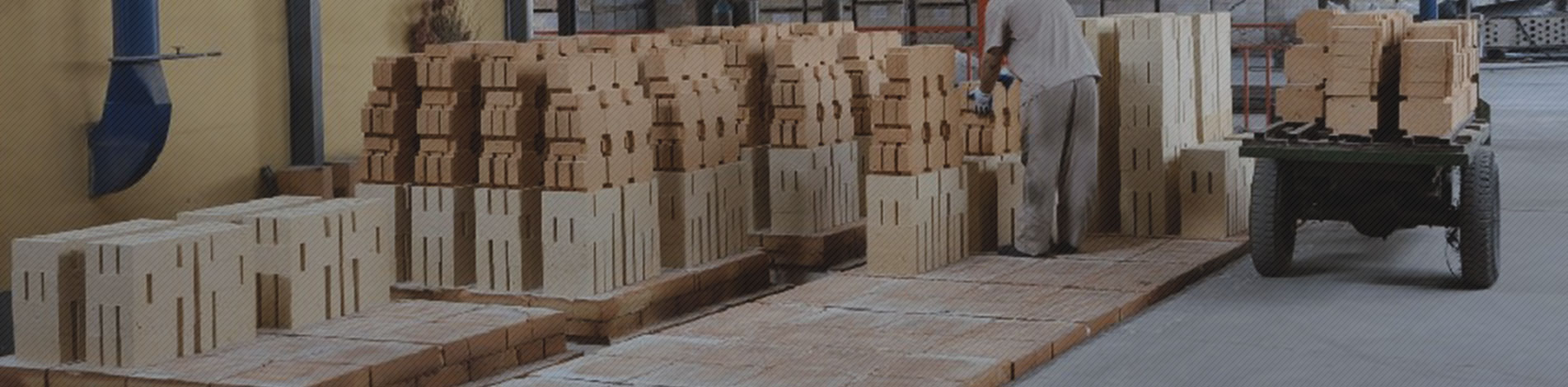


Highland Refrakter manufactures heavy-duty, dense shaped yüksek alümina içerikli ateş tuğlaları designed specifically for direct hot-face working linings in extreme industrial furnaces. Produced from high-purity calcined bauxite and fused corundum aggregates under 630-ton to 1000-ton hydraulic press forming, our bricks deliver high refractoriness under load (0.2 MPa RUL ≥ 1420°C–1530°C), extreme mechanical abrasion resistance, and strict dimensional tolerances of ±1,0 mm.
Highland Refrakter manufactures heavy-duty, dense shaped yüksek alümina içerikli ateş tuğlaları designed specifically for direct hot-face working linings in extreme industrial furnaces. Produced from high-purity calcined bauxite and fused corundum aggregates under 630-ton to 1000-ton hydraulic press forming, our bricks deliver high refractoriness under load (0.2 MPa RUL ≥ 1420°C–1530°C), extreme mechanical abrasion resistance, and strict dimensional tolerances of ±1,0 mm.
Dense high alumina fire bricks are shaped aluminosilicate refractory materials possessing an aluminum oxide (Al2O3) concentration exceeding 48%, engineered primarily to withstand severe mechanical compression, molten metal contact, chemical slag corrosion, and high thermal gradients inside heavy industrial furnaces.
Manufactured using dense calcined bauxite, mullite grog, and high-purity reactive bonding clays, Highland's bricks are fired in computer-controlled tunnel kilns at temperatures ranging from 1450°C to 1600°C. The high firing temperature develops a robust inter-crystalline ceramic bond dominated by interlocking mullite (3Al2O3·2SiO2) and corundum (α-Al2O3) crystal phases, ensuring low reheat linear shrinkage (≤ ±0.3% at 1450°C×2h) and exceptional volume stability.
To eliminate procurement confusion caused by differing regional nomenclatures, Highland maps Chinese National Standards (GB/T 2988) directly against Japanese JIS and international ASTM standards:
Al2O3 ≥ 48%. Cost-effective high-duty upgrade over fire clay bricks. Applied in low-temperature boiler flues, glass furnace regenerator upper packing, and non-ferrous holding furnaces.
Al2O3 ≥ 55%. Balanced thermal shock resistance and hot strength. Ideal for ceramic tunnel kiln cars, hot blast stove lower checkerwork, and lime shaft kiln preheating zones.
Al2O3 ≥ 65%. High density and low porosity. Widely specified for blast furnace shaft middle zones, steel ladle safety linings, and cement rotary kiln transition zones.
Al2O3 ≥ 75%. Heavy-duty hot-face brick with RUL ≥ 1520°C. Outstanding resistance to basic and acidic slags in electric arc furnace roofs, torpedo ladles, and cement burning zones.
Al2O3 ≥ 80%. Approaching synthetic corundum properties. Designed for blast furnace bosh and belly, molten iron runners, and high-wear petrochemical cracking furnaces.
Enriched with fused mullite and andalusite. Guarantees creep rates ≤ 0.2% (1400°C×50h at 0.2 MPa), mandatory for modern super-large hot blast stove combustion chambers.
The following property table represents verified inspection data under China GB/T and ASTM standards. All batches are backed by independent third-party inspection certificates:
| Standard Model | JIS Equivalent | Al2O3 (%) | Fe2O3 (%) | Yığın Yoğunluğu (g/cm³) | Görünür Gözeneklilik (%) | Soğuk Kırılma Dayanımı (MPa) | 0.2 MPa RUL (°C) | Refrakterlik (°C) |
|---|---|---|---|---|---|---|---|---|
| LZ-48 | SK-35 | ≥ 48 | ≤ 2,2 | ≥ 2,15 | ≤ 23 | ≥ 40 | ≥ 1420 | ≥ 1750 |
| LZ-55 | SK-36 | ≥ 55 | ≤ 2,0 | ≥ 2,25 | ≤ 22 | ≥ 45 | ≥ 1470 | ≥ 1770 |
| LZ-65 | SK-37 | ≥ 65 | ≤ 1,8 | ≥ 2.35 | ≤ 23 | ≥ 50 | ≥ 1500 | ≥ 1790 |
| LZ-75 | SK-38 | ≥ 75 | ≤ 1.6 | ≥ 2.45 | ≤ 23 | ≥ 55 | ≥ 1520 | ≥ 1790 |
| LZ-80 | SK-39 | ≥ 80 | ≤ 1.5 | ≥ 2,55 | ≤ 21 | ≥ 68 | ≥ 1530 | ≥ 1790 |
| LZ-DR0.2 | Low-Creep | ≥ 72 | ≤ 1,2 | ≥ 2.48 | ≤ 19 | ≥ 65 | ≥ 1550 | ≥ 1790 |
*Note: For complete engineering selection advice regarding creep rate, thermal conductivity curve, and thermal shock cycles, review our comprehensive Yüksek alümina içerikli ateş tuğlası türleri seçim kılavuzu.
Dense high alumina fire bricks are essential refractory workhorses across high-temperature heavy industries:
In integrated steelworks, LZ-65 and LZ-75 grades are installed in blast furnace middle stack linings, hot metal torpedo cars, and steel ladle working bottoms. For complete zoning matching between bricks and monolithic repair, see our Çelik kepçe refrakter astar bölgelendirme kılavuzu.
The upper transition zone and calcining zone of rotary cement kilns endure severe alkali salt vapors (K2O, Na2O) and mechanical ovality flexing. Highland's phosphate-bonded and dense LZ-75 bricks resist chemical spalling and form a stable protective coating under clinker contact.
High alumina checker bricks (top and middle layers) absorb and release massive quantities of heat during flue gas reversals. With high bulk density and low porosity, they resist dust deposition and alkali vapor clogging for campaign lives exceeding 8–10 years.
Furnace stability depends fundamentally on masonry precision. Highland guarantees a strict dimensional tolerance of ±1,0 mm across all standard catalog and custom drawings:
To ensure zero edge chipping and breakage during intermodal sea freight, Highland enforces export-grade packaging protocols:
Dense high alumina bricks have high bulk density (2.15–2.60 g/cm³) and low porosity (<22%), engineered for direct hot-face exposure against molten metal, corrosive slag, and mechanical flame abrasion. In contrast, yüksek alümina içerikli yalıtım tuğlaları feature high porosity (45%–75%) and low density (0.8–1.3 g/cm³), designed exclusively as backup thermal insulation to minimize shell heat loss.
For steel ladle safety linings, LZ-65 (SK-37) or LZ-75 (SK-38) bricks provide the ideal balance between high structural strength, slag penetration resistance, and cost efficiency. If direct molten steel contact occurs in the working bottom, LZ-80 or corundum-spinel bricks are recommended.
Standard refractoriness measures softening temperature under zero mechanical pressure. In real furnaces, bricks carry massive structural loads. Refractoriness under load (0.2 MPa RUL) indicates the exact temperature (1420°C–1530°C) where deformation starts under operational pressure, serving as the true engineering threshold for refractory lining safety.
Yes. Highland operates in-house mold tooling workshops. We produce custom radius arch bricks, burner tile assemblies, and interlock groove bricks based on your PDF or DWG drawings with guaranteed dimensional tolerances within ±1.0 mm.
Indicative export pricing ranges from USD 210.00 to 580.00 / Metric Ton (or from USD 1.20 / piece FOB Qingdao) depending on Al2O3 grade and geometric complexity. Standard shape orders are dispatched within 10 to 15 business days from our Zhengzhou plant.
Direct supply from Zhengzhou Highland Refractory. Complete SK36–SK39 & LZ-48 to LZ-80 inventory with verified ISO 9001 test reports. Fast sampling and rapid dispatch to Qingdao Port.
REFRAKTER MÜHENDİSLERİMİZLE İLETİŞİME GEÇİN →Direct Factory Pricing • Free Standard Sample Pieces • Fast Technical Consultation
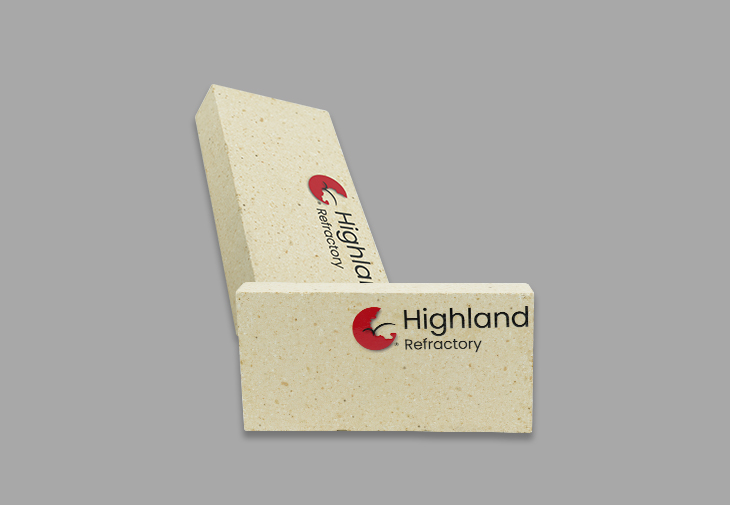
Alüminyum içeriği 75%-80% Refrakter 1770℃ veya üzeri

Yüksek alüminalı poli hafif tuğla, yüksek kaliteli hafif bir refrakter malzemedir.

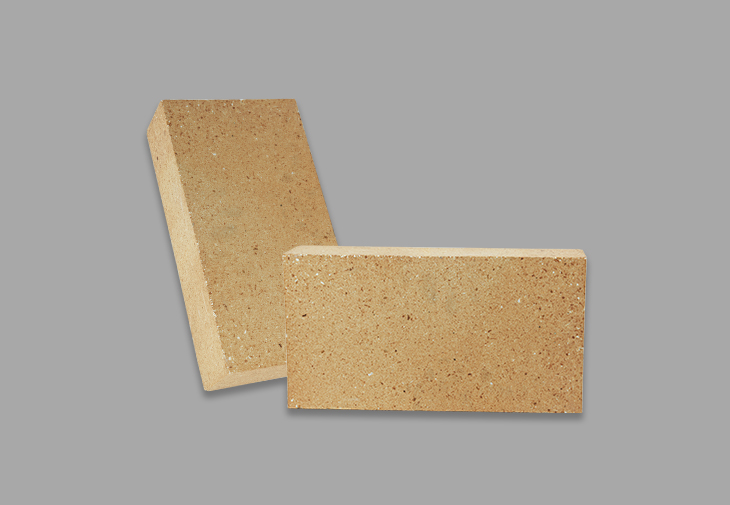
Alümina içeriği 48%-60% Refrakterlik 1770℃'nin üzerindedir
Alüminyum içeriği 65%-75% 1770℃ üzerinde refrakterlik

Silisyum karbür plakalar esas olarak agrega olarak silisyum karbürden (SiC) oluşur (içeriği genellikle ≥ 80%'dir).

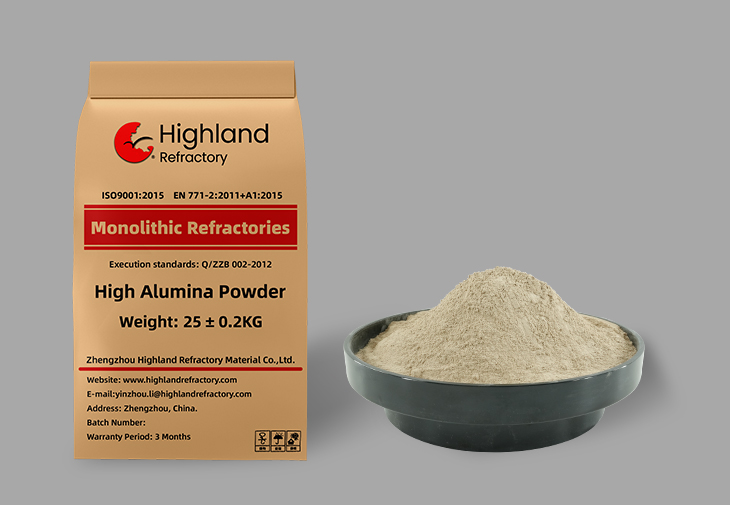
Yüksek alümina ince toz, ana bileşen olarak alümina (Al2O3) içeren bir toz malzemedir.

Kil tozu, ana bileşeni kil mineralleri olan toz halindeki bir malzemedir.
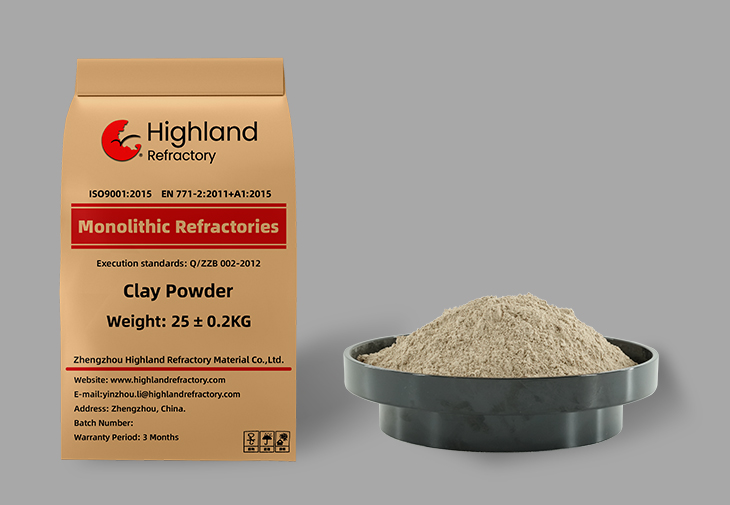
Kil tozu, ana bileşeni kil mineralleri olan toz halindeki bir malzemedir.

Alüminat çimentosu olarak da bilinen refrakter çimento, yangına dayanıklı hidrolik çimentolu bir malzemedir.
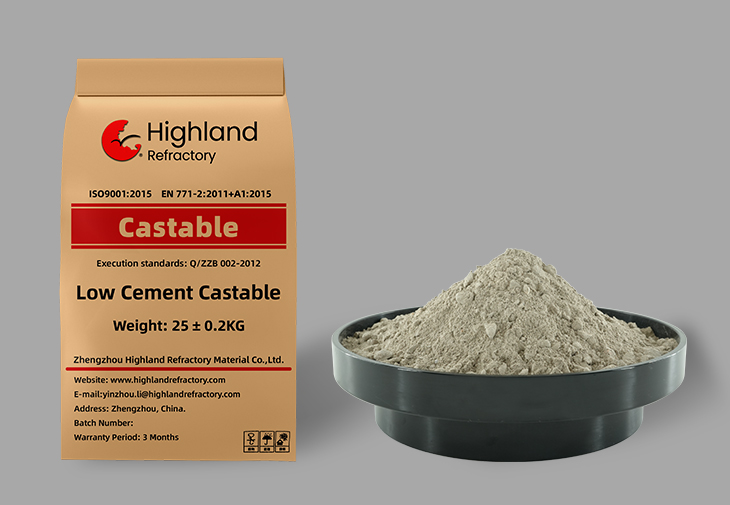
Düşük çimentolu dökülebilir malzeme, düşük çimento içerikli dökülebilir malzemeyi ifade eder.
Alüminyum içeriği 75%-80% Refrakter 1770℃ veya üzeri
