
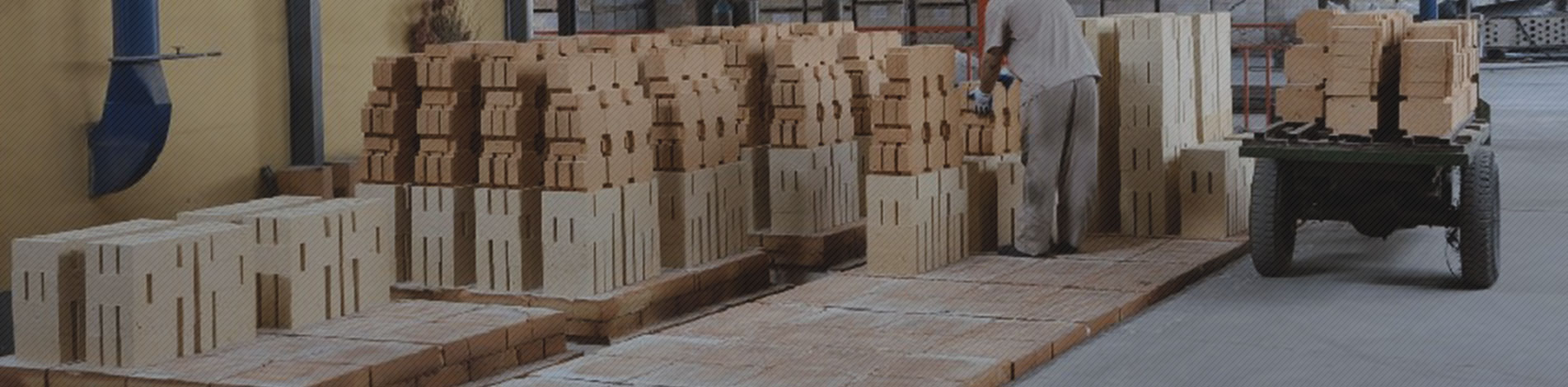

Abrasion resistant castables are monolithic refractory materials selected for industrial areas exposed to repeated abrasion, particle erosion, mechanical impact and other forms of refractory wear. Unlike a single-product formulation, an abrasion resistant castable category can include different material systems designed for different combinations of temperature, wear intensity, mechanical loading and chemical exposure.
Highland Refractory's abrasion resistant castable range is intended to help industrial buyers compare different refractory options before selecting a specific product. Depending on the working conditions, selection may involve steel fiber reinforced castables, high alumina castables, low cement systems and other specialized formulations.

Steel fiber wear-resistant castables are widely used in high temperature and wear-resistant environments in many industrial fields such as metallurgy, building materials, and chemicals.
Steel fiber wear-resistant castables are widely used in high temperature and wear-resistant environments in many industrial fields such as metallurgy, building materials, and chemicals.
Abrasion resistant castables are refractory castable systems intended for high-temperature areas where mechanical wear, erosion or impact can contribute to lining damage. The appropriate formulation depends on the actual wear mechanism, operating temperature, mechanical loading and chemical environment. For this reason, abrasion resistant castables should be treated as a product category rather than as one universal material specification.
| 1. Product range | Abrasion Resistant Castable Product Range |
| 2. Castable types | Types of Abrasion Resistant Castables |
| 3. Applications | Industrial Applications |
| 4. Performance | Key Performance Requirements |
| 5. Selection | How to Select an Abrasion Resistant Castable |
| 6. Comparison | Castable Type Comparison |
| 7. Product navigation | Explore Specific Products |
| 8. Installation | Installation Considerations |
| 9. B2B procurement | B2B Procurement |
| 10. FAQ | Abrasion Resistant Castables FAQ |
Abrasion resistant castables are not limited to one chemical composition or one installation design. Different refractory systems can be used depending on whether the primary problem is continuous particle abrasion, high-velocity erosion, direct impact, thermal cycling or a combination of these conditions.

The purpose of this product category is to help buyers identify the most relevant castable system before moving to a detailed product specification. Highland Refractory's range includes products that can be considered for different combinations of mechanical wear, high temperature and refractory lining requirements.
A steel fiber reinforced refractory castable intended for applications where mechanical strength, toughness, thermal cycling and resistance to impact or wear are important selection factors.
The specific F1, F2 and F3 grades should be evaluated using the dedicated product specifications.
A high-alumina monolithic refractory option for applications where alumina content and high-temperature refractory performance are important together with the required mechanical properties.
The appropriate alumina grade should be selected according to the actual service conditions and technical specification.
Low cement castables provide another material option for high-performance monolithic refractory construction. They can be considered where a dense refractory matrix and strong mechanical structure are required.
Final suitability depends on the formulation, lining position, operating conditions and installation procedure.
Some refractory zones require a formulation selected around specific wear, temperature, chemical or mechanical conditions. In these cases, the castable should be evaluated as part of the complete lining design.
Submit the project conditions when a standard product specification does not directly match the application.
Abrasion resistant castables can be grouped according to the material system used to address the service conditions. The correct category depends on the dominant wear mechanism and on the other requirements placed on the refractory lining.
Steel fiber reinforced castables are considered where mechanical reinforcement is important. The steel fibers are incorporated into the refractory matrix to support toughness and resistance to mechanical stress, impact and thermal cycling.
High alumina castables can be evaluated where a higher alumina refractory composition is required. Their suitability for wear service depends on the actual formulation and the mechanical and chemical conditions of the lining.
Low cement systems can be selected where the refractory design requires a dense castable structure and suitable high-temperature mechanical properties. Their abrasion performance depends on the complete formulation.
Certain severe-service applications may require a refractory formulation designed around a specific combination of wear, erosion, impact, temperature and chemical exposure. These requirements should be reviewed at project level.
Abrasion resistance is a performance requirement, not a single raw-material category. Two castables may both be described as abrasion resistant while using different aggregate systems, binders or reinforcement strategies. The final selection should therefore be based on the complete product specification.
Abrasion resistant castables are used in selected industrial equipment where refractory linings are exposed to mechanical wear, material flow, particle impact or erosion at elevated temperatures. The actual refractory zone should be identified before choosing a product.
Cement-processing equipment can expose refractory linings to clinker movement, impact, abrasion and thermal cycling. Selected abrasion resistant castables can be considered for high-wear areas where the lining design permits monolithic construction.
Circulating fluidized-bed equipment can expose refractory surfaces to continuous high-velocity particle movement and erosion. Material selection should consider particle velocity, temperature, lining geometry and the specific wear mechanism.
Metallurgical equipment can combine high temperature with mechanical impact, slag movement and refractory wear. The castable should be matched with the specific furnace or process area rather than selected only by industry name.
Selected refractory areas in boilers and other thermal equipment can experience particle erosion, ash movement and thermal cycling. Abrasion resistant castables may be evaluated where the service environment requires a stronger wear-oriented lining system.
Incineration equipment can expose refractory linings to abrasive ash, high gas velocity, thermal cycling and chemical attack. Product selection should consider the combination of wear and chemical conditions in the working zone.
Some process equipment exposes refractory materials to flowing particles, erosion and elevated temperatures. The appropriate castable should be selected according to the actual process environment and equipment construction.
When an industrial buyer evaluates an abrasion resistant castable, abrasion loss is only one part of the technical decision. The refractory may need to tolerate several types of stress at the same time.
Abrasion resistance is important where solid particles continuously contact and wear the refractory surface. The evaluation should consider the actual type of material movement and the severity of the wear environment.
High-velocity gases or moving particles can gradually remove refractory material from exposed surfaces. Erosion should therefore be considered separately from simple mechanical abrasion when selecting the material system.
Where large particles, clinker, slag or other solid materials repeatedly strike the lining, impact resistance becomes an important selection factor. Steel fiber reinforced castables may be considered when mechanical reinforcement is required.
Compressive strength and modulus of rupture can be relevant where the lining is subjected to mechanical loading, structural stress or handling during service. The values should be compared using the same test conditions and technical standard.
Repeated heating and cooling can produce thermal stress and contribute to cracking or spalling. For applications with frequent temperature changes, thermal-cycle performance should be considered together with the mechanical properties of the castable.
Slag, alkalis, process gases, ash and other aggressive substances may contribute to refractory damage. A material that performs well mechanically may still be unsuitable if its chemical compatibility with the process is poor.
Wear, temperature, impact, thermal cycling and chemical exposure should be considered together. There is no universal abrasion resistant castable that is automatically suitable for every industrial service zone.
A practical selection process starts with the actual refractory zone rather than the product name. The following sequence can help engineering and procurement teams identify the appropriate castable category before reviewing the detailed TDS.
Determine whether the main problem is abrasion, erosion, impact or a combination.
Review normal operating temperature, peak exposure and thermal cycling conditions.
Identify slag, alkali, ash, gases or other chemical factors that may attack the lining.
Compare steel fiber, high alumina, low cement and other suitable refractory formulations.
Check the selected product against the project specification and supplier TDS.
For a B2B procurement decision, buyers should compare the relevant chemical and physical properties of the candidate products rather than relying on a general statement such as "high wear resistance."
Different castable systems address different combinations of wear and high-temperature service. The table below is intended as a product-navigation reference, not as a universal performance ranking.

| Castable Type | Main Selection Focus | Typical Service Requirement | Next Evaluation Step |
|---|---|---|---|
| Steel Fiber Castable | Mechanical strength, toughness, impact and thermal cycling | High-temperature zones exposed to combined mechanical and thermal stress | Review the F1, F2 and F3 product specifications |
| High Alumina Castable | Alumina content and high-temperature refractory performance | High-temperature linings where alumina-rich refractory chemistry is required | Compare the applicable alumina grade and technical data |
| Low Cement Castable | Dense refractory structure and mechanical performance | Demanding monolithic linings requiring a suitable low-cement system | Review the product formulation and installation requirements |
| Specialized Formulation | Specific combination of wear, temperature and chemical conditions | Applications where standard categories do not fully match the project requirement | Submit the process and lining requirements for technical review |
Once the service conditions have been identified, move from the category level to the specific product page. The dedicated product page should provide the detailed technical data required for engineering evaluation and procurement.
Product details for Highland Refractory's steel fiber reinforced castable, including F1, F2 and F3 grades and the applicable mechanical and thermal-cycle specifications.
View Steel Fiber Castable →Explore the high alumina castable range for projects where alumina content and high-temperature refractory performance are important material-selection factors.
View High Alumina Castable →Review the low cement castable category for monolithic refractory applications where a dense refractory structure and suitable mechanical properties are required.
View Low Cement Castable →Browse Highland Refractory's wider castable range when the application requires comparison beyond abrasion-resistant formulations.
Explore Castable Series →Correct installation is an essential part of refractory performance. Even when the selected material has suitable technical properties, poor mixing, uneven placement, uncontrolled water addition or inadequate curing can affect the final lining.
The castable should be mixed according to the manufacturer's approved installation procedure. Uniform distribution of aggregates, fines, binder and any reinforcement is important for a consistent refractory structure.
The installation method should be matched to the lining geometry and product formulation. Where vibration or another compaction method is required, the procedure should provide adequate filling without causing segregation.
Curing conditions should follow the product-specific technical instructions. The appropriate curing period can depend on the formulation, ambient conditions, lining thickness and construction method.
Controlled heating is important because refractory castables contain water after installation. The heat-up procedure should therefore follow the approved installation schedule for the selected product rather than a generic castable heating program.
Industrial buyers purchasing abrasion resistant castables should provide enough technical information for the supplier to identify the appropriate material system. A generic request such as "high wear castable" may not provide sufficient information for accurate product selection.
Before order confirmation, buyers should compare the applicable technical data sheet with the project specification. Depending on the castable type, this may include chemical composition, density, MOR, CCS, abrasion-related test results, thermal cycling data and permanent linear change.
Price should be compared only after the candidate products have been technically matched. Two castables may have different compositions and performance requirements even when both are marketed as abrasion resistant castables. A technically aligned comparison is therefore more useful than a price-only comparison.
Abrasion resistant castables are monolithic refractory materials selected for industrial areas exposed to mechanical abrasion, particle erosion, impact and related wear conditions. The appropriate formulation depends on the actual service environment.
The terms are often used to describe castable refractory materials intended for demanding wear conditions. In practice, the exact performance depends on the formulation and test data, so buyers should compare the technical specification rather than rely on the terminology alone.
Depending on the product range, abrasion resistant castables may include steel fiber reinforced castables, high alumina castables, low cement castables and other specialized refractory formulations. The suitable category depends on the wear mechanism, temperature, mechanical load and chemical environment.
Start with the actual wear mechanism, then consider operating temperature, impact, mechanical load, thermal cycling and chemical exposure. After the material category has been identified, compare the relevant technical data and installation requirements of the available products.
They can be evaluated for selected high-wear areas in cement processing, CFB boilers and cyclones, metallurgy, power generation, waste-to-energy equipment, petrochemical processing and other high-temperature industrial systems where monolithic refractory construction is suitable.
Send us your equipment type, lining location, operating temperature, wear mechanism, chemical environment and estimated quantity. Highland Refractory can then help identify the appropriate castable category and provide the applicable product information for technical evaluation.
Steel fiber wear-resistant castables are widely used in high temperature and wear-resistant environments in many industrial fields such as metallurgy, building materials, and chemicals.
