
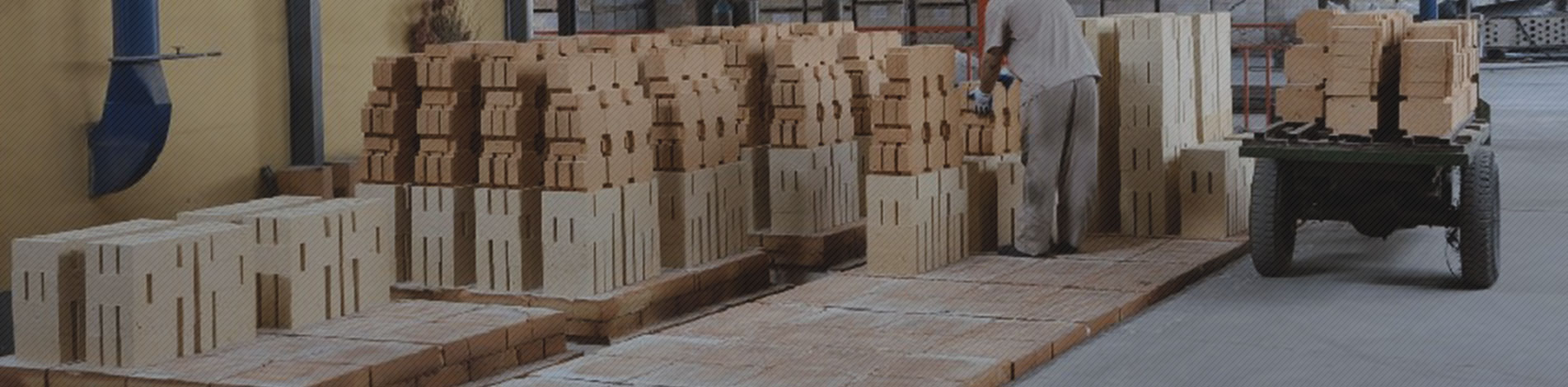


Steel Fiber Castable is a reinforced monolithic refractory designed for demanding industrial areas where mechanical strength, thermal cycling, impact and wear resistance are important. Steel fiber reinforcement is incorporated into the refractory matrix to improve the castable's overall toughness and mechanical performance under service conditions.
Highland Refractory supplies three grades, F1, F2 and F3, with Al₂O₃ contents of ≥80%, ≥70% and ≥65% respectively. The grades are differentiated by their mechanical performance after drying and sintering, together with their performance after rapid heating and cooling cycles at 1100°C. This allows buyers to select a grade according to the required refractory properties and application conditions.
For B2B projects, we provide product specifications for technical evaluation and can review the required application, grade and quantity before quotation.
What is Steel Fiber Castable?
Steel Fiber Castable is a refractory castable reinforced with steel fibers. Its main product value is the combination of a refractory castable matrix with steel-fiber reinforcement, providing a material intended for high-temperature applications where strength, toughness, thermal cycling and resistance to mechanical damage are important.
Steel Fiber Castable is a type of steel fiber reinforced castable in which steel fibers are incorporated into a refractory castable system. The refractory matrix provides the basic high-temperature structure, while the fiber reinforcement is used to improve the material's resistance to mechanical stress and cracking.

Unlike a standard castable selected only for alumina content and compressive strength, a steel fiber reinforced castable is typically considered when the lining is also exposed to repeated thermal changes, impact, abrasion or mechanical stress.
For this reason, selecting steel fiber castable should not be based on the product name alone. Buyers should compare the chemical grade, modulus of rupture, compressive strength, thermal cycling performance and permanent linear change against the actual working conditions of the equipment.
Highland Refractory offers F1, F2 and F3 grades covering different Al₂O₃ levels. The supplied technical data also distinguishes performance after drying at 110°C × 24h from performance after sintering at 1100°C × 3h.
Mechanical strength is one of the main technical considerations when selecting a steel fiber refractory castable. The product data for F1–F3 includes both modulus of rupture (MOR) and compressive strength (CCS), allowing buyers to compare the grades under different heat-treatment conditions.
F1 provides the highest listed Al₂O₃ content and the highest MOR and CCS values among the three grades. F2 occupies the intermediate range, while F3 provides a lower Al₂O₃ grade with correspondingly lower mechanical-strength requirements.
Steel-fiber reinforcement is intended to improve the toughness of the castable system and help the refractory lining tolerate mechanical stress. This is particularly relevant where a refractory lining is exposed not only to high temperature but also to impact, vibration or repeated thermal stress.
Thermal cycling is especially important for refractory linings that experience repeated heating and cooling. The supplied product specification includes MOR after five rapid cooling and heating cycles from 1100°C to room temperature, providing a specific reference for comparing the F1, F2 and F3 grades.
Permanent linear change is another important consideration because excessive dimensional change can affect the stability of a refractory lining. For F1, F2 and F3, the supplied specification gives a permanent linear change of ±0.5% after sintering at 1100°C × 3h.
The following table presents the product data provided for Highland Refractory's F1, F2 and F3 steel fiber castable grades. Test conditions are shown together with the corresponding values so that engineering and purchasing teams can use the data correctly.
| Product Property | Test Condition | F1 | F2 | F3 |
|---|---|---|---|---|
| Al₂O₃ (%) | — | ≥80 | ≥70 | ≥65 |
| Modulus of Rupture (MOR) / MPa | 110°C × 24h After drying |
≥12.0 | ≥10.0 | ≥9.0 |
| 1100°C × 3h After sintering |
≥12.0 | ≥10.0 | ≥6.5 | |
| Compressive Strength (CCS) / MPa | 110°C × 24h After drying |
≥90 | ≥80 | ≥70 |
| 1100°C × 3h After sintering |
≥90 | ≥80 | ≥50 | |
| MOR after 5 cycles of rapid cooling and heating in water at 1100°C to room temperature / MPa | 5 cycles | ≥5.5 | ≥5.0 | ≥5.0 |
| Permanent Linear Change on Heating / % | 1100°C × 3h After sintering |
±0.5 | ±0.5 | ±0.5 |
The three grades are designed to provide different levels of alumina content and mechanical performance. The choice should be based on the actual refractory requirements rather than treating one grade as universally suitable.
F1 contains ≥80% Al₂O₃. It provides the highest listed MOR and CCS values among the three grades and is the highest-specification option in the supplied product range.
F2 contains ≥70% Al₂O₃ and provides an intermediate specification within the series. It can be evaluated where the required balance of alumina content and mechanical performance falls between the F1 and F3 grades.
F3 contains ≥65% Al₂O₃. It provides a lower alumina option within the series and should be selected according to the required mechanical, thermal and application conditions.
The most direct difference between F1, F2 and F3 is the combination of Al₂O₃ content and mechanical-performance requirements. F1 is the highest alumina grade in this product range, while F2 and F3 provide progressively lower alumina levels.
When comparing the grades, procurement teams should also look beyond the Al₂O₃ percentage. The MOR and CCS values after drying and sintering, as well as the results after five rapid thermal cycles, provide a more complete picture of the product specification.

Refractory linings can experience significant thermal stress when temperature changes occur repeatedly. For steel fiber castable, thermal cycling performance is therefore an important part of product evaluation.
Highland Refractory's supplied specification tests the modulus of rupture after five rapid cooling and heating cycles in water from 1100°C to room temperature. The results are:
This test is useful when comparing the thermal-cycle behavior of the three grades under the specified laboratory condition. However, actual refractory performance will also depend on lining design, installation quality, heating and cooling rates, service atmosphere and the operating environment.
For engineering selection, the thermal-cycle result should therefore be used together with the MOR, CCS, alumina content and permanent linear change rather than considered as a stand-alone indicator.
Steel fiber castable is intended for high-temperature refractory applications where the lining may also experience mechanical stress, impact, wear or thermal cycling. The exact application should be matched with the selected grade and the actual service environment.
Steel fiber castables can be considered for selected high-wear or impact-exposed areas of cement-processing equipment where a reinforced monolithic lining is required.
Selection should consider the local temperature, abrasion intensity, thermal cycling and installation conditions.
In industrial furnaces, steel fiber castable can be evaluated for refractory areas subject to repeated thermal stress and mechanical loading.
The appropriate grade depends on the required alumina level and mechanical properties of the lining.
Steel fiber reinforced castables can be used in selected high-temperature equipment where the lining needs a combination of mechanical strength and resistance to thermal cycling.
Application-specific design should determine whether steel fiber castable is appropriate for the individual lining zone.
Metallurgical equipment can include areas exposed to heat, impact and mechanical wear. Steel fiber castable may be evaluated for suitable refractory zones where a reinforced castable solution is required.
Final selection should be based on actual process conditions rather than industry category alone.
Selecting a steel fiber refractory castable should start with the operating conditions and the function of the lining. The following five factors can be used as a practical starting point for technical evaluation.
Identify the actual operating temperature and the temperature changes experienced by the lining.
Determine whether the refractory is exposed to abrasion, particle movement or other mechanical wear.
Check whether solid materials or equipment movement create repeated mechanical impact.
Consider start-up, shutdown and other rapid heating or cooling conditions.
Compare Al₂O₃, MOR, CCS, thermal-cycle performance and permanent linear change.
F1, F2 and F3 should be treated as different technical options rather than as a simple "good, better, best" ranking. The right grade depends on the refractory design and the requirements of the specific application.
For example, when a project specification calls for higher Al₂O₃ and higher mechanical strength, F1 may be evaluated first because it is the highest specification in the supplied series. Where the required performance is lower, F2 or F3 may provide a more appropriate specification.
The final choice should be confirmed using the complete technical specification and the customer's process conditions.
The performance of a castable lining depends not only on the refractory material but also on mixing, placement, curing and heating procedures. This is particularly important for steel fiber castable because the steel fibers need to be distributed consistently throughout the refractory matrix.

Uniform distribution of the steel fiber is important for consistent reinforcement throughout the castable. Mixing procedures should follow the manufacturer's technical instructions and the requirements of the specific formulation.
Water addition should be controlled according to the product's approved installation procedure. Excessive water can change castable properties and should not be introduced simply to improve workability.
Proper curing and controlled dry-out are important parts of refractory installation. The heating schedule should be designed according to the castable formulation, lining thickness and equipment conditions.
Steel fiber castable is one option within a broader castable refractory product range. The correct selection depends on the main challenge in the refractory zone rather than choosing a material solely by its nominal temperature resistance.
| Castable Type | Main Selection Focus | Typical Reason for Selection |
|---|---|---|
| Steel Fiber Castable | Mechanical strength, toughness, thermal cycling, wear and impact | High-temperature zones exposed to combined thermal and mechanical stress |
| High Alumina Castable | Al₂O₃ level and high-temperature refractory performance | High-temperature linings where alumina content is a key design factor |
| Lightweight Insulating Castable | Low density and thermal insulation | Applications where heat loss reduction and low lining weight are important |
| Abrasion Resistant Castables | Wear and abrasion resistance across different castable solutions | High-wear industrial zones where several material options may need to be compared |
Industrial procurement of steel fiber castable normally requires more information than a product name and a price. Before quotation, the supplier should understand the intended application, required grade, operating conditions, quantity and technical specification.
Providing this information allows the supplier to evaluate the application before recommending a grade. For large industrial projects, a complete technical specification is preferable to selecting a castable based only on the highest available strength value.
Highland Refractory's F1, F2 and F3 specifications can be used as a starting point for technical comparison. Where a project has a specific refractory standard, equipment drawing or existing material requirement, the product specification should be checked against the project requirements before order confirmation.
For project orders, buyers can provide their existing technical specification or refractory requirement so that the product can be evaluated against the requested performance parameters. This is especially useful when the lining is part of a larger refractory system and multiple castable types are being considered.
Steel fiber castable is a refractory castable reinforced with steel fibers. It is designed for applications where the lining requires a combination of refractory performance and improved mechanical toughness, particularly under thermal cycling, impact or wear conditions.
The main advantages include high mechanical strength, improved toughness, thermal cycling performance and suitability for refractory areas exposed to mechanical stress, impact or wear. Actual performance depends on the selected grade and application conditions.
F1, F2 and F3 are the three grades in this product range. Their Al₂O₃ contents are ≥80%, ≥70% and ≥65% respectively, with different MOR and CCS requirements after drying and sintering.
The supplied specification includes tests after drying at 110°C × 24h, after sintering at 1100°C × 3h, and after five rapid cooling and heating cycles from 1100°C to room temperature. These are test conditions and should not automatically be interpreted as the product's maximum service temperature.
Compare the application temperature, thermal cycling, mechanical loading, wear or impact conditions, required Al₂O₃ content, MOR, CCS and dimensional stability. The appropriate grade should be selected based on the actual refractory zone and project specification.
Send us your application area, operating temperature, required grade, quantity and technical specification. Our team can review the working conditions and help identify the appropriate steel fiber castable option for your project.
Request Technical Specification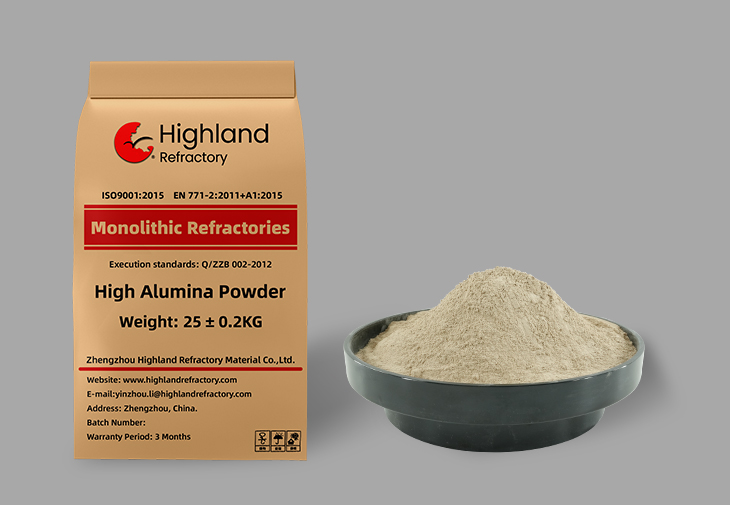
High alumina fine powder is a powder material with alumina (Al2O3) as the main component.
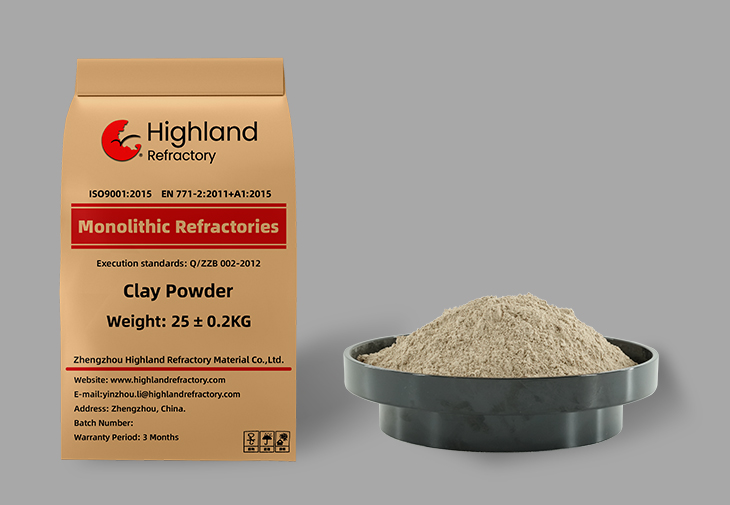
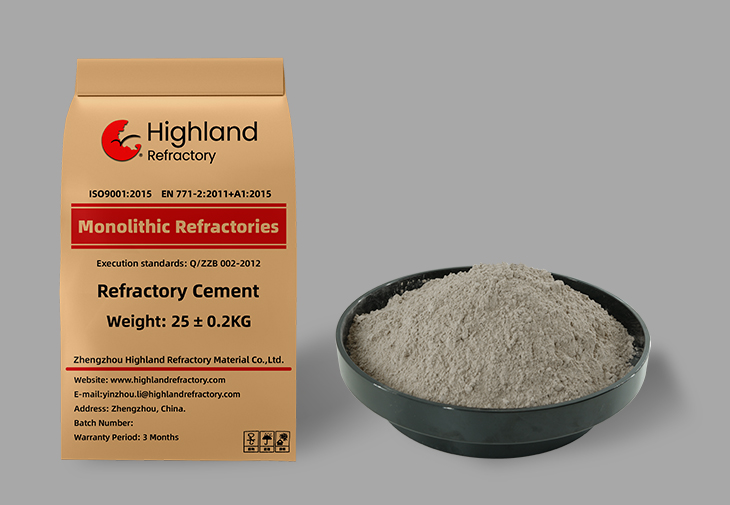
Refractory cement, also known as aluminate cement, is a fire-resistant hydraulic cementitious material.

White corundum castable is a high-quality high-temperature refractory material with high-purity alumina powder as the main raw material.

High Alumina Castable refers to a refractory castable with Al2O3 content greater than 48%.
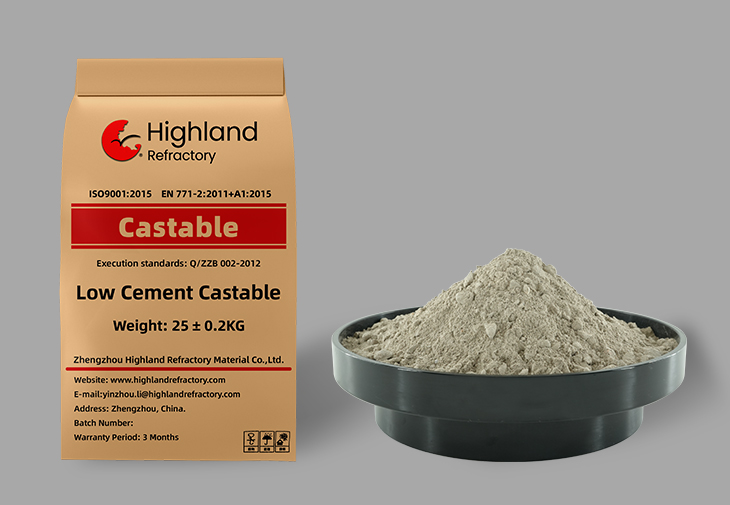

Lightweight insulation castable is a refractory with low density and excellent insulation properties.

Corundum mullite castable is a high-quality high-performance refractory material with high thermal conductivity, insulation, good chemical stability and resistance to reducing agents.

Silicon carbide castable is an amorphous refractory material with silicon carbide as the main component.

Chrome corundum castable is a high-performance amorphous refractory material composed of corundum and chromium. It has high melting point, high hardness, high stability and excellent slag resistance and wear resistance.

high alumina cement is a powder material with alumina (Al2O3) as the main component.
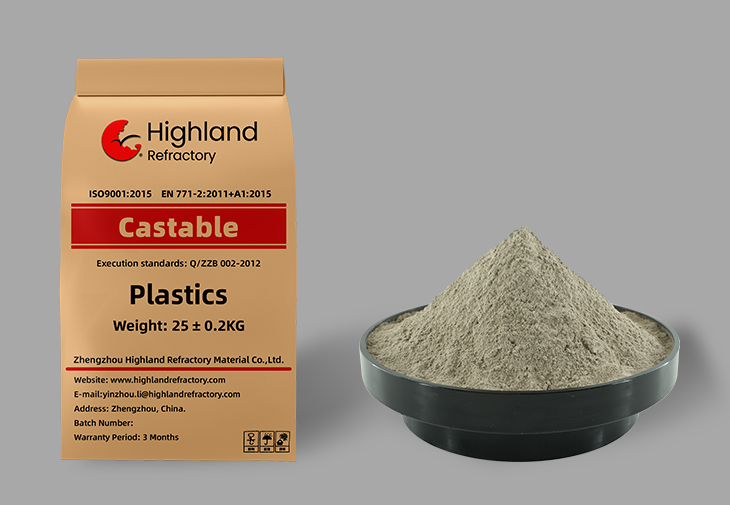
Plastic is an amorphous refractory material in the form of hard mud and has high plasticity.
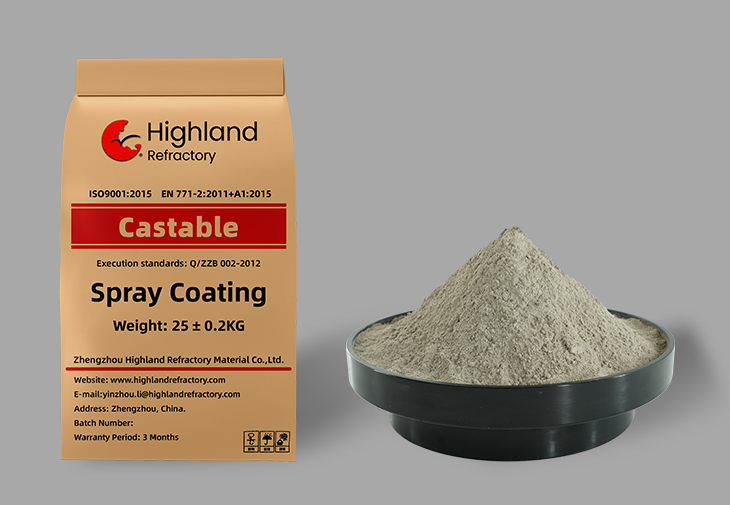
Refractory spray coating is a kind of amorphous refractory material, which is applied to the lining of thermal equipment by spraying construction method.

Aluminum content 75%-80% Refractory 1770℃ or above


High alumina poly light brick is a high quality lightweight refractory material.
