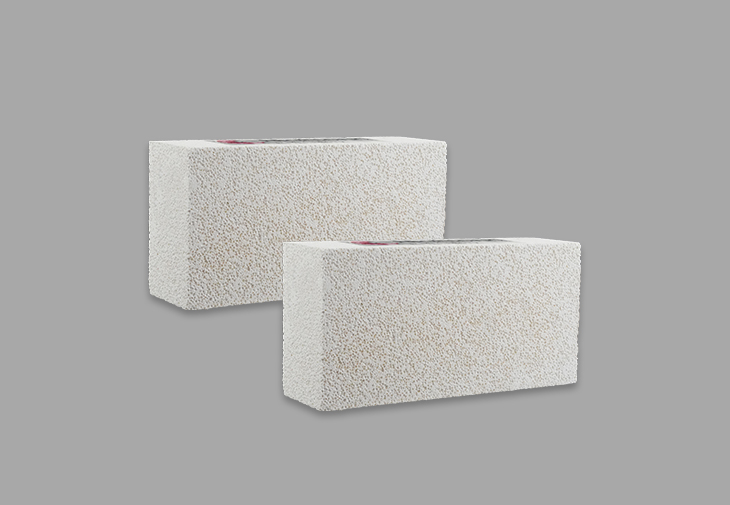
Mullite Insulation Brick is a high-performance refractory for 1200–1600℃. With low density (0.9–1.3g/cm³) & thermal conductivity (≤0.35W/(m·K)@1000℃), it cuts heat loss, resists thermal shock. Fits kilns, furnaces in metallurgy, ceramics. ISO-compliant, durable for energy-saving.
Highland Refractory’s Corundum Mullite Brick stands out for its exceptional high-temperature performance, with key specs: refractoriness up to 1750-1850℃, cold compressive strength ≥80MPa, and bulk density ≥2.6g/cm³—ensuring strong thermal stability and slag resistance. As a premium refractory option, it aligns with mullite corundum brick standards and works as a reliable Refractory Mullite Brick for harsh industrial environments.
JM28 Insulation Brick, made of high-quality raw materials, is a top-tier thermal insulation solution designed to offer exceptional performance in high-temperature environments. Known for its outstanding thermal insulation properties, JM28 is ideal for use in furnaces, kilns, boilers, and other high-temperature industrial applications. With its excellent insulating qualities, low thermal conductivity, and robust physical properties, JM28 Insulation Brick provides significant benefits to industries aiming to improve energy efficiency, reduce operational costs, and increase the lifespan of high-temperature equipment. The 2026 international market reference price for export-grade JM28 insulation bricks typically ranges from: USD 1.80 – USD 4.50 per piece (standard dimensions) USD 650 – USD 1,150 per metric ton (FOB China, bulk orders)
JM30 is the highest-rated grade in the JM mullite insulation brick series. Its “30” designation represents 3000°F (1650°C) in the ASTM C155 classification system. This is the top of the insulating firebrick range — where low thermal mass and high structural performance must coexist with genuine service capability at temperatures approaching 1650°C.
JM23 Insulation Brick is the lightest-density grade in the JM mullite insulation brick series, classified to a maximum service temperature of 1260°C (2300°F) in accordance with ASTM C155. The “23” designation represents its 2300°F classification temperature, making it an ideal lightweight insulating firebrick for energy-efficient furnace and kiln insulation. Featuring low thermal conductivity, lightweight construction, excellent dimensional stability, and reliable thermal insulation performance, JM23 insulation bricks are widely used as backup linings and insulation layers in ceramic kilns, heat treatment furnaces, boilers, and other medium-temperature industrial equipment, helping reduce heat loss and improve overall energy efficiency. 2026 Market Reference Price: Export-grade JM23 insulation bricks typically range from USD 1.20–3.20 per piece (standard sizes) or USD 450–850 per metric ton (FOB China).
Highland Refractory supplies JM23, JM26, JM28 and JM30 mullite insulation bricks. Max service temp 1260–1650°C. ISO certified, factory direct. Get technical specs & quote within 2 hours.
K23 Insulating Firebrick is a lightweight refractory insulation brick designed for high-temperature applications where thermal insulation, energy efficiency, and stable performance are critical.
Backup InsulationFor suitable layers behind a working lining or around a furnace shell.
Grade-Based SelectionChoose by equipment position and service conditions, not by grade name alone.
Technical ReviewShare drawings, dimensions and operating data before a project quotation.
What Are Mullite Insulation Bricks?
Mullite insulation bricks are lightweight refractory products designed primarily to reduce heat transfer, lining heat storage and furnace shell heat exposure in suitable industrial equipment. Their value is determined by the balance between thermal conductivity, bulk density, dimensional stability and mechanical strength for a specific lining position.
In a composite furnace lining, an insulating brick may be installed behind a denser working layer or in another location where heat conservation is more important than direct resistance to severe abrasion, molten material or mechanical impact. A lightweight mullite brick should therefore not be selected only because its classification temperature appears suitable. The surrounding structure, gas movement, support condition, thermal cycling, atmosphere and lining thickness also need review.
The term mullite insulating brick may cover several grades and product formats. Highland uses this page to organize the available product routes. Grade-specific chemical composition, physical properties, test conditions and acceptance values should be taken from the corresponding approved technical data rather than copied into a general directory page.
Mullite Insulation Brick Product Directory
Use the product cards below to move from a general series overview to the technical page that matches your procurement requirement. The short descriptions are intentionally limited: detailed TDS values, grade-specific application boundaries and quotation conditions belong on the individual product pages.
JM Series
JM23, JM26, JM28 and JM30 Insulation Bricks
JM series insulation bricks are organized by grade so buyers can compare the approved service range, thermal insulation data, strength and dimensional information relevant to their equipment. Select the comparison page first when the correct JM grade is not yet confirmed.
Open the JM23 page when your furnace design, operating conditions and approved material schedule specifically call for this grade. Review its own technical data and application notes rather than applying another JM grade's values.
Use the JM26 product page for grade-specific data, installation considerations and technical review. The selection should be checked against the actual temperature profile, support arrangement and required insulation thickness.
Open the JM28 page when a higher-grade insulation brick is being evaluated for a defined furnace or kiln position. Confirm the approved TDS, test conditions and installation design before placing a project order.
Use the JM30 page for its own product documentation and selection limits. A higher classification or grade label alone does not determine whether a brick is suitable for a direct hot face, load-bearing position or chemically aggressive environment.
K23 is listed as a related insulating firebrick route. It should not be described as a mullite grade unless the approved material documentation confirms that classification. Follow the product page for its own composition, properties and application scope.
For special shapes, the available design route depends on the product, equipment and drawing review. Submit the furnace layout or brick drawing before assuming that a standard grade can be supplied in a non-standard geometry.
Grade Selection at a Glance
Start with the lining position and failure risk, then compare the approved data for the grades that remain suitable. The table below is a screening guide rather than a substitute for a project specification.
Requirement
Recommended review route
Lower heat transfer or lining heat storage
Review a suitable lightweight insulating grade and its thermal conductivity test condition.
Kiln or furnace backup insulation
Start with the JM grade comparison, then confirm the individual grade TDS.
Roof, wall or kiln-car insulation
Check temperature, support, mechanical load, installation direction and thermal cycling.
Direct flame, molten material or severe abrasion
Do not select a lightweight brick automatically. Review a dense refractory solution or submit the full lining conditions.
Unconfirmed grade or irregular equipment
Send the equipment type, lining position, operating temperature, dimensions and available drawing for review.
A backup insulation brick can work as part of a composite lining, but the final arrangement must account for the working layer, joints, support and adjacent materials. Classification temperature alone is not sufficient for material selection.
Typical Lining Positions and Applications
Mullite insulation bricks are selected by equipment position rather than by industry label alone. The same furnace may contain several refractory layers, and each layer may require a different balance of insulation, strength, dimensional stability and resistance to the local atmosphere.
Ceramic Kilns
For kiln walls, roofs or backup layers where thermal cycling, support and available thickness need to be reviewed together.
Heat-Treatment Furnaces
For selected wall, roof or maintenance areas where heat conservation and lining heat capacity are part of the design review.
Tunnel Kilns
For fixed linings or kiln-car insulation when mechanical support, repeated heating cycles and brick geometry are confirmed.
Industrial Furnace Backup Lining
For a layer behind a denser working lining, subject to compatibility, thickness, anchoring and the temperature at the insulation layer.
For direct hot-face, high-abrasion or molten-material contact, review the dense refractory route separately. You can compare the product boundary through the dense corundum mullite brick page; that page is responsible for dense product data and should not be duplicated here.
What to Check Before Selecting a Grade
Before requesting a quotation for a kiln insulation brick or furnace backup lining, prepare the operating and installation information below. This helps separate a general product inquiry from a project-ready technical review.
Temperature profile: provide continuous temperature, peak temperature, heating rate, cooling rate and cycle frequency where available.
Lining position: identify whether the brick is used as a hot face, structural layer, backup insulation or shell-side insulation.
Local exposure: describe gas velocity, dust, abrasion, atmosphere, chemical vapors and any contact with molten material.
Mechanical conditions: confirm support, load, anchors, installation direction, joints and the thickness available for insulation.
Product requirements: provide brick type, dimensions, tolerance requirements, quantity, packaging needs and target delivery location.
Technical documents: attach a CAD, DXF, PDF drawing, existing TDS or lining schedule if available.
These details support a more accurate discussion with a mullite insulation brick supplier. They do not create a performance guarantee; final selection remains subject to approved product data, project design and order confirmation.
Custom Shapes and Technical Documents
Standard straight bricks may be suitable for conventional furnace construction, while some projects require wedges, curved pieces, special cuts, openings or coordinated dimensions across multiple lining layers. Highland can review custom insulation brick shapes when the product, equipment and manufacturing route are confirmed.
Send a furnace drawing, brick layout, section detail or dimension schedule for review. The technical discussion may cover geometry, installation sequence, joint arrangement, adjacent refractory materials, packaging and inspection documents. Any dimensional tolerance, sample arrangement, packing condition or delivery schedule should be confirmed in the project quotation rather than assumed from a general page.
Available documentation depends on the product and order. Ask for the relevant approved TDS, inspection information and packing details when requesting a quotation.
Quality and Supply Information
For B2B procurement, the useful quality discussion is product-specific and document-based. Confirm the selected grade, approved technical data, test conditions, inspection records, packaging requirements and order specifications before production or shipment. Certification references should be used only when the certificate is current and applicable to the product being quoted.
Highland can review the equipment conditions and available drawings before recommending a grade direction. Product availability, minimum order quantity, packing, delivery schedule and final commercial terms remain subject to project confirmation.
Related Refractory Resources
Use the links below to move to the page responsible for the next level of detail:
They are used in selected insulating, backup or shell-side positions in industrial kilns and furnaces. The correct application depends on temperature, support, thermal cycling, atmosphere, mechanical exposure, lining thickness and the adjacent refractory layers.
How do I choose between JM23, JM26, JM28 and JM30?
Start with the equipment position and operating conditions, then compare the approved technical data for the JM grades that fit those conditions. Do not select a grade from the name or classification temperature alone. Contact Highland with the furnace data for a project-specific review.
Can mullite insulation bricks be used as the direct hot face?
Not automatically. A direct hot face may require a different balance of density, strength, abrasion resistance and chemical resistance. Review the lining position and local exposure first; a dense refractory product may be more appropriate for severe hot-face conditions.
Can Highland supply custom sizes or shapes?
Custom sizes or shapes can be reviewed when the product route, dimensions, drawing and manufacturing requirements are available. Submit a CAD, DXF, PDF or dimension schedule so the shape, tolerance and installation arrangement can be confirmed before quotation.
What information is needed for a quotation?
Please provide the equipment type, lining position, operating temperature, thermal cycle, brick dimensions, quantity, available drawing, target delivery location and any required inspection or packing documents. Minimum order quantity, if applicable, will be confirmed for the specific project. Made-to-order per project confirmation. This page is intended for industrial procurement, not household retail.
Request a Mullite Insulation Brick Recommendation
Send your equipment type, lining position, operating temperature, required dimensions, quantity and available drawings. Highland will review the suitable grade direction and provide the relevant technical and quotation information subject to product data and project confirmation.
For industrial procurement only. Final grade, dimensions, technical values, packing, minimum order quantity, delivery schedule and commercial terms require confirmation for the specific project.
K23 Insulating Firebrick is a lightweight refractory insulation brick designed for high-temperature applications where thermal insulation, energy efficiency, and stable performance are critical.