


Chrome corundum castable is a dense high-alumina monolithic refractory material specified with Al₂O₃ ≥80%, Fe₂O₃ ≤0.6% and Cr₂O₃ ≥6%.
The current Highland Refractory product specification also lists a bulk density of ≥3.1 g/cm³, high compressive and bending strength under the stated test conditions, and heating linear change of ±0.3% after 1100°C × 24 h.
Chrome corundum castable is a dense high-alumina monolithic refractory material specified with Al₂O₃ ≥80%, Fe₂O₃ ≤0.6% and Cr₂O₃ ≥6%. The current Highland Refractory product specification also lists a bulk density of ≥3.1 g/cm³, high compressive and bending strength under the stated test conditions, and heating linear change of ±0.3% after 1100°C × 24 h.
Chrome corundum castable is a monolithic refractory material based on a corundum-containing refractory system with chromium oxide specified as part of the chemical composition. It is supplied in castable form for installation into selected high-temperature refractory structures.
The current Highland Refractory product specification identifies Al₂O₃ at ≥80%, Fe₂O₃ at ≤0.6% and Cr₂O₃ at ≥6%. The specified bulk density is ≥3.1 g/cm³, indicating a dense material rather than a lightweight insulating castable.

For industrial buyers, Chrome Corundum Castable should be selected based on the actual operating conditions of the refractory zone. Temperature is important, but mechanical loading, erosion, chemical exposure, thermal cycling and the role of the refractory layer should also be considered.
The following technical data are taken directly from the product property information supplied for the Chrome Corundum Castable. Strength values are shown together with their stated heating conditions because these conditions are part of the technical specification.
| Property | Test Condition | Specification |
|---|---|---|
| Product | Product designation | Chrome Corundum Castable |
| Al₂O₃ | Chemical composition | ≥80% |
| Fe₂O₃ | Chemical composition | ≤0.6% |
| Cr₂O₃ | Chemical composition | ≥6% |
| Bulk Density | As specified in product property data | ≥3.1 g/cm³ |
| Compressive Strength | 110°C × 24 h | ≥90 MPa |
| Compressive Strength | 1100°C × 3 h | ≥110 MPa |
| Bending Strength | 110°C × 24 h | ≥12 MPa |
| Bending Strength | 1100°C × 3 h | ≥13 MPa |
| Linear Change After Heating | 1100°C × 24 h | ±0.3% |
For refractory procurement, each technical property should be connected with the actual service requirement. The current specification provides chemical composition, density, mechanical strength and heating linear change data.
The product is specified with Al₂O₃ ≥80%. Alumina content is a primary chemical parameter for evaluating the refractory composition and should be considered together with Cr₂O₃, Fe₂O₃ and the physical properties.
Cr₂O₃ is specified at ≥6%. This chromium-containing chemistry is a defining characteristic of the product and should be considered when evaluating the material for a specific refractory environment.
The Fe₂O₃ content is limited to ≤0.6% in the supplied specification. This provides a defined chemical requirement for the material supplied under the stated product designation.
The specified bulk density is ≥3.1 g/cm³. This is consistent with a dense refractory material and distinguishes the product from lightweight insulating castables intended primarily for thermal insulation and lower density.
Compressive strength is specified at ≥90 MPa after 110°C × 24 h and ≥110 MPa after 1100°C × 3 h. These are test-condition-specific values and should not be treated as a universal field strength at every temperature.
Bending strength is specified at ≥12 MPa after 110°C × 24 h and ≥13 MPa after 1100°C × 3 h. This information can be considered when reviewing mechanical requirements of the refractory construction.
Heating linear change is specified at ±0.3% after 1100°C × 24 h. This parameter is relevant when dimensional behavior is important to the refractory lining design.
Chrome corundum castable is intended for selected demanding refractory applications where its dense corundum-based construction and chromium-containing chemistry match the service environment. The exact suitability should always be evaluated by refractory zone.
Chrome corundum castable may be considered for selected furnace lining zones where high-temperature refractory performance and dense monolithic construction are required. The local temperature and mechanical exposure should be reviewed before selection.
Selected steelmaking and metallurgical equipment may require a castable with controlled chemical composition and strong mechanical properties. The exact zone should be assessed for slag, erosion, thermal cycling and direct process exposure.
Where abrasion or erosion is a major factor, the complete material specification should be reviewed against the local wear conditions. A grade should not be chosen solely because it contains chromium oxide.
Applications involving significant chemical or slag exposure may require specific material compatibility. The supplied Cr₂O₃ and other chemical limits should therefore be considered together with the process environment.
Certain furnace and kiln zones may be candidates for Chrome Corundum Castable when their thermal, mechanical and chemical requirements are compatible with the current product specification.
Other thermal-processing equipment can be evaluated individually when a dense corundum-based monolithic refractory is required and the service conditions match the product data.

A practical application review starts with the conditions experienced by the refractory layer. The product becomes a candidate when its chemical and mechanical specification aligns with the requirements of that zone.
| Service Condition | Selection Direction | What to Confirm |
|---|---|---|
| High Temperature | Chrome corundum may be considered | Actual operating condition and current product TDS |
| High Mechanical Load | Dense high-strength grade may be relevant | Compressive and bending strength requirements |
| Chemical / Slag Exposure | Review chromium-containing chemistry | Actual process chemistry and compatibility |
| Severe Abrasion | Consider the complete wear-resistant system | Actual erosion and abrasion mechanism |
| Thermal Insulation Priority | Another refractory category may be more appropriate | Density and thermal conductivity requirements |
Chrome corundum castable and corundum castable are both dense high-alumina refractory materials, but their chemical systems are different. The choice should therefore be based on the service conditions rather than assuming that the chromium-containing product is universally better.
| Factor | Chrome Corundum Castable | Corundum Castable |
|---|---|---|
| Main Material Direction | Corundum-based system with specified Cr₂O₃ | Corundum-based dense refractory system |
| Chemical Focus | Al₂O₃ + Cr₂O₃ + controlled Fe₂O₃ | High Al₂O₃ and associated chemical limits |
| Selection Focus | High temperature + chemical / wear environment | High alumina + mechanical and thermal requirements |
| Density Direction | Dense | Dense |
| Best Selection Method | Match Cr₂O₃ chemistry and physical properties to the actual service zone | Match chemical and physical properties to the actual service zone |
For the related product, see Corundum Castable .
Corundum-mullite castable represents a different refractory formulation and should be selected according to the required thermal and mechanical balance. Review the specific product data before making a substitution.
Mullite-based castables have a different material direction from chrome corundum castable. The appropriate choice depends on the actual furnace or thermal-equipment requirements.
When reduced density and thermal insulation are the primary objectives, a lightweight insulating castable may be more appropriate than a dense chrome corundum product.
Selecting the appropriate chrome corundum castable starts with the application conditions. The product specification should then be compared against those conditions before the grade is approved for procurement.
Define the exact location where the castable will be installed and whether it will function as a directly exposed working lining or another part of the refractory system.
Review operating temperature, expected peak exposure and thermal cycling for the actual refractory layer.
Consider abrasion, erosion, impact and structural loading before relying on strength data alone.
Identify slag, process gases, ash, molten material or other chemical exposure that may affect the refractory system.
Review Al₂O₃, Cr₂O₃, Fe₂O₃, bulk density, compressive strength, bending strength and linear change against the project specification.
Before placing an order, confirm the applicable mixing, placement, curing and drying instructions for the supplied product.
Castable performance depends not only on dry material properties but also on correct preparation and installation. The installation procedure for the actual product grade should therefore be confirmed before construction.
Mixing should follow the product's applicable technical instructions. Water addition should not be assumed from another castable grade because different formulations may have different construction requirements.
The placement method should be appropriate for the product and lining design. Proper compaction and installation practice are important for obtaining a uniform castable structure.
Curing and dry-out should be controlled according to the applicable technical procedure and project conditions. The heating schedule should be appropriate for the installed lining and its moisture condition.
For industrial buyers, purchasing chrome corundum castable requires both technical specification control and supply verification. The final order should identify the agreed product and the applicable technical requirements clearly.
Packaging, delivery schedule and quality documentation should be confirmed for the individual order rather than assumed from a general website description.

Before receiving an industrial shipment, buyers can verify the supplied material against the agreed product designation and purchasing documents. Where contractual testing is required, the agreed test methods and acceptance criteria should be followed.
Confirm that the delivered material is identified as the agreed Chrome Corundum Castable product.
Check packaging integrity and confirm that the material has been protected during storage and transportation.
Verify the delivered quantity against the purchase order and shipping documentation.
Check that the applicable TDS or quality documents correspond to the supplied product and agreed specification.
Highland Refractory supplies chrome corundum castable for industrial and project-based refractory requirements. For B2B purchasing, the most useful quotation information includes the equipment type, refractory zone, operating conditions, required quantity and destination.
Buyers may also provide an existing refractory specification or TDS when replacing an existing material. This allows the product requirement to be reviewed against the actual application instead of relying only on the product name.
The current product specification should be used as the basis for technical comparison, while order-specific commercial details such as packaging, delivery schedule and documentation should be confirmed during the quotation process.
Chrome corundum castable is a dense monolithic refractory material with a corundum-based composition containing a specified level of Cr₂O₃. The current Highland Refractory product specification lists Al₂O₃ ≥80%, Cr₂O₃ ≥6%, Fe₂O₃ ≤0.6% and bulk density ≥3.1 g/cm³.
It can be considered for selected high-temperature refractory applications where dense construction, controlled chromium-containing chemistry and mechanical performance are required. Potential applications include selected furnace linings, metallurgical equipment and other demanding thermal-processing zones, subject to actual service conditions.
The supplied product specification lists Cr₂O₃ at ≥6%.
The supplied product specification lists Al₂O₃ at ≥80%.
The current supplied product data lists bulk density at ≥3.1 g/cm³.
Compressive strength is specified at ≥90 MPa after 110°C × 24 h and ≥110 MPa after 1100°C × 3 h.
Bending strength is specified at ≥12 MPa after 110°C × 24 h and ≥13 MPa after 1100°C × 3 h.
The supplied product property data specifies heating linear change at ±0.3% after 1100°C × 24 h.
Both are dense corundum-based refractory materials, but Chrome Corundum Castable contains a specified Cr₂O₃ component as part of its product chemistry. The appropriate choice depends on the chemical environment and other service requirements of the refractory zone. See the related Corundum Castable product page for comparison.
Provide the equipment type, refractory zone, operating conditions, required lining thickness, estimated quantity and delivery destination. If available, also provide an existing TDS, technical specification or material designation so that the requirement can be reviewed more precisely.
Send your equipment type, refractory zone, operating conditions, required quantity and delivery destination. Highland Refractory can review the application, confirm the applicable Chrome Corundum Castable specification and provide the relevant technical documentation and quotation.
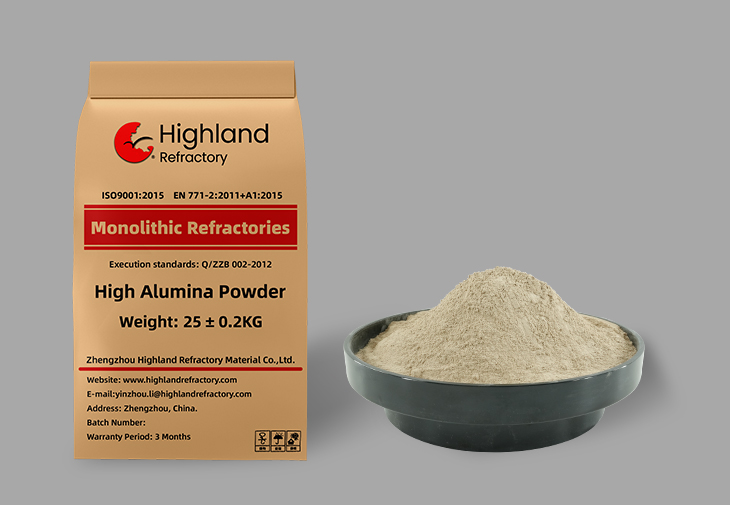
High alumina fine powder is a powder material with alumina (Al2O3) as the main component.
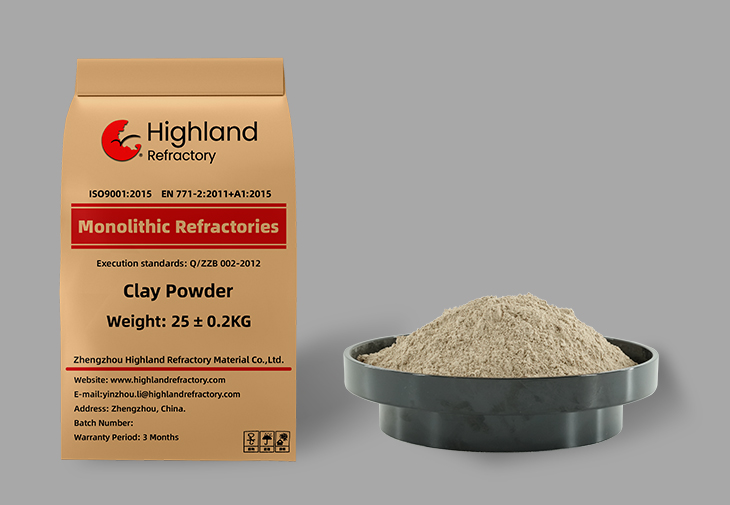

Refractory cement, also known as aluminate cement, is a fire-resistant hydraulic cementitious material.

Steel fiber wear-resistant castables are widely used in high temperature and wear-resistant environments in many industrial fields such as metallurgy, building materials, and chemicals.

White corundum castable is a high-quality high-temperature refractory material with high-purity alumina powder as the main raw material.

High Alumina Castable refers to a refractory castable with Al2O3 content greater than 48%.
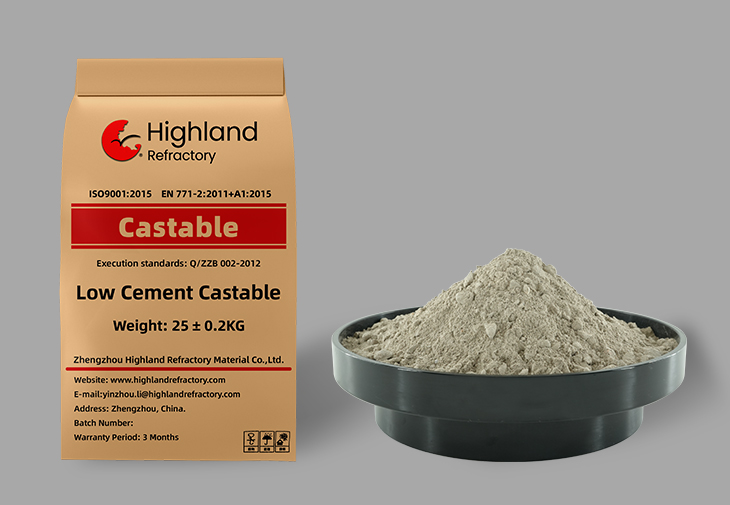

Lightweight insulation castable is a refractory with low density and excellent insulation properties.

Corundum mullite castable is a high-quality high-performance refractory material with high thermal conductivity, insulation, good chemical stability and resistance to reducing agents.

Silicon carbide castable is an amorphous refractory material with silicon carbide as the main component.

high alumina cement is a powder material with alumina (Al2O3) as the main component.
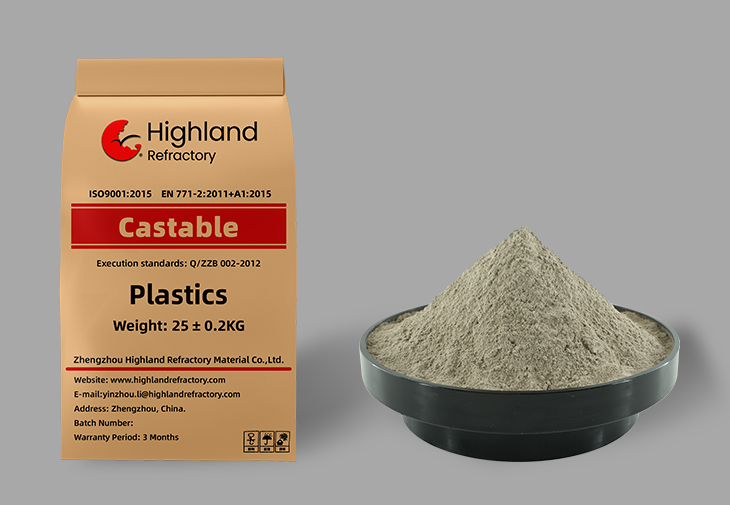
Plastic is an amorphous refractory material in the form of hard mud and has high plasticity.
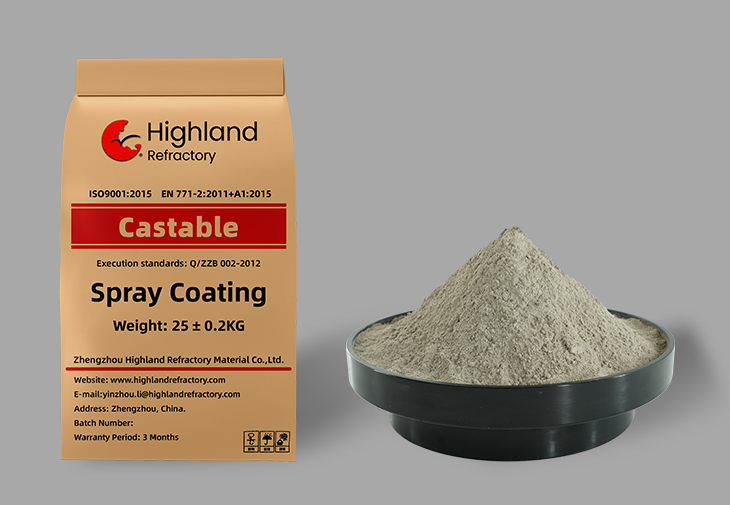
Refractory spray coating is a kind of amorphous refractory material, which is applied to the lining of thermal equipment by spraying construction method.
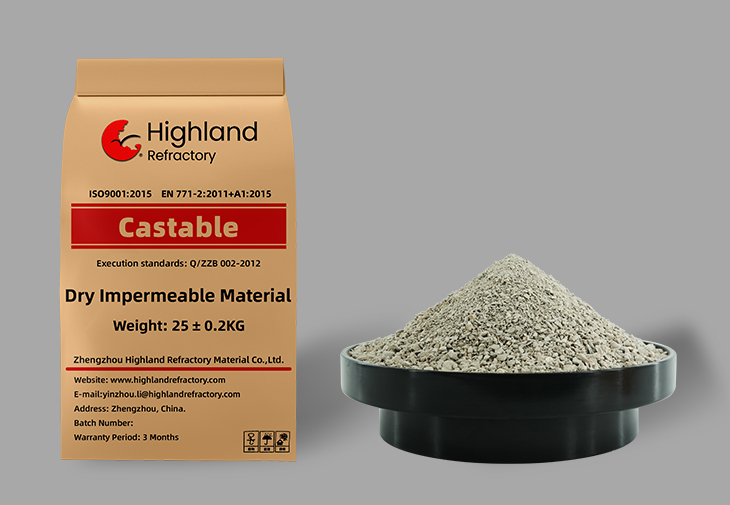
Widely used in a variety of furnace front package, transfer package, ladle insulation layer...
High temperature and high strength repair material is a special material used to repair equipment and structures in high temperature environments.
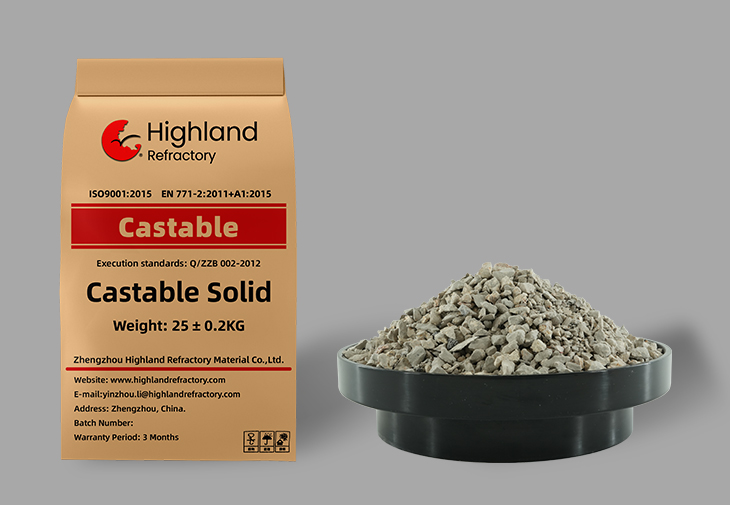
Widely used in a variety of furnace front package, transfer package, ladle insulation layer...
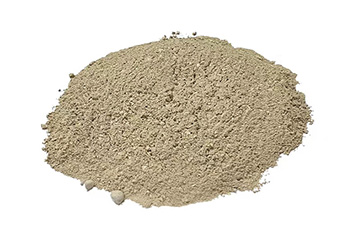
Lining coating is a functional material used on the surface of high-temperature equipment or facilities...

Used for insulation and heat preservation of the ladle walls in the operation of cast iron...

Aluminum content 75%-80% Refractory 1770℃ or above


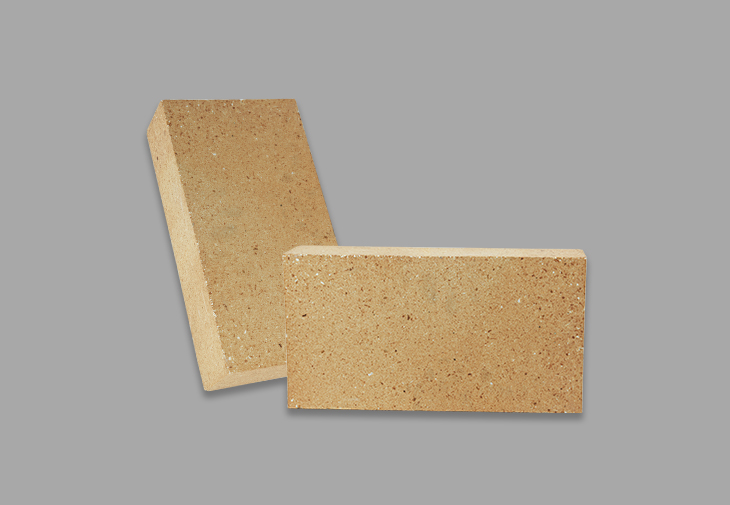

Silicon carbide plates are mainly composed of silicon carbide (SiC) as the aggregate (with a content usually ≥ 80%).

Clay powder is a powdery material with clay minerals as the main component.
