

Comprehensive comparison of refractory castables and refractory cement
Refractory materials play a vital role in applications in high-temperature environments, especially in industries such as metallurgy, chemicals, ceramics and energy. Refractory castables and refractory cement are two common refractory materials. They have significant differences in composition, performance, construction technology, etc. Understanding these differences is critical to selecting the appropriate refractory material. The following is a detailed comparison of refractory castables and refractory cement:
1. Ingredients and composition
Refractory castables are mainly composed of refractory aggregates, binders and additives. Refractory aggregates typically include bauxite, silica, magnesia, etc. These aggregates provide the material’s fire resistance and mechanical strength. Binders are used to combine aggregates into shapes. Commonly used binders include cement-based binders, phosphate binders, etc. Additives are used to improve a material’s flow, strength or other properties. For example, aluminum powder can be used to improve a material’s resistance to thermal shock.
Refractory cement is mainly made from clinker (such as calcium aluminate clinker) obtained by calcining bauxite ore and limestone at high temperatures. Clinker is ground into fine powder during the grinding process and then mixed with a certain amount of additives. The main component of refractory cement is calcium aluminate, and its chemical reaction can generate refractory compounds during the hardening process.
2. Application method
Refractory castables are usually used where flexible molding is required. During construction, refractory castables can be poured directly on site and are suitable for filling complex-shaped gaps or surfaces. It can be deployed as needed to adapt to different high temperature environments and structural requirements. For example, refractory castables are often used for internal repair and lining of high-temperature equipment such as furnace linings and kiln linings.
Refractory cement is mainly used to prepare refractory bricks or mixed with other refractory materials. Its applications often include making prefabricated refractory bricks or refractory panels, which need to be shaped and sintered before use. The refractory cement mixture needs to be formed into bricks or other shapes at the construction site and then installed.
3. Performance characteristics
Refractory castables have high fluidity and low construction difficulty. It exhibits excellent fire resistance, thermal shock resistance and corrosion resistance at high temperatures. Due to its higher flowability, refractory castables are better able to fill irregular voids and complex shapes. This makes it excellent in some applications that require high structural strength and complex molding.
Refractory cement has excellent compressive strength and stability. During the curing process, it forms a strong, fire-resistant structure. Although its fire resistance is also very high, its stability at high temperatures may not be as good as some advanced refractory castables. Refractory cement requires a long time to solidify during use, which may have an impact on the construction progress.
4. Construction technology
The construction process of refractory castables is relatively simple. During construction, materials often need to be vibrated to ensure density and that large areas can be laid quickly. After pouring, the surface of the refractory castable can be trimmed by smoothing or other treatment methods to ensure that it meets the usage requirements.
The construction of refractory cement is relatively complicated. Refractory cement and water need to be mixed in a certain proportion and then quickly formed. The mixture needs to be strictly controlled during construction to ensure its strength and fire resistance. In addition, refractory cement is sensitive to environmental conditions (such as temperature, humidity) during the curing process, which may affect the construction process.
5. Cost and Economics
The cost of refractory castables is usually higher, but may show better economics in long-term use, especially if it has strong adaptability to high temperatures and corrosive environments. Its high fire resistance and service life make its long-term maintenance costs low.
Refractory cement is relatively low cost and suitable for projects with limited budgets. However, due to some challenges during its construction and relatively long curing time, it may increase the overall construction cost in some cases.
Summarize
Refractory castables and refractory cement each have their own advantages and disadvantages. Refractory castables are suitable for high-temperature applications that require flexible molding and complex structures. Their advantages include high fluidity, fire resistance and ease of construction. Refractory cement is suitable for manufacturing and repairing refractory bricks and other forms of refractory structures. Its advantages include excellent compressive strength and low cost. The selection of appropriate refractory materials should be determined based on the specific application environment, construction requirements and economic conditions.
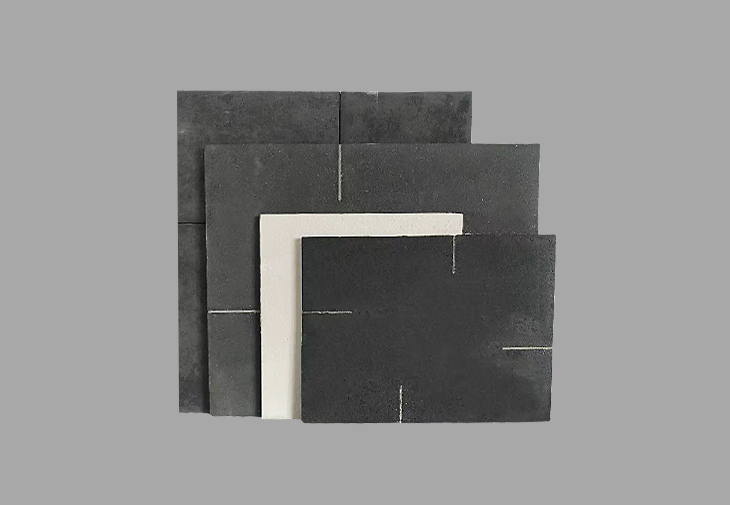
Silicon carbide plates are mainly composed of silicon carbide (SiC) as the aggregate (with a content usually ≥ 80%).